We are excited to be part of Backyard Biennial: East, a free, summer arts festival initiated by Whitechapel Gallery in collaboration with more than 40 local partners across East London.
We are running three free activities during the festival. See below for more information and how to book your place:
Wearing Our Stories: Stitching Identity Through Football
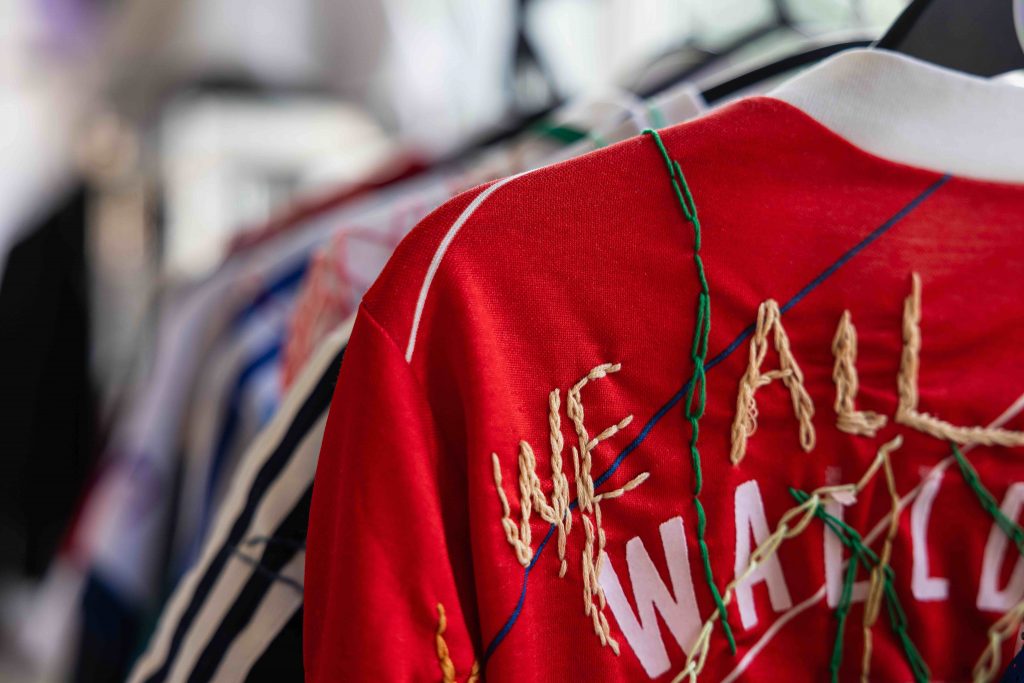
Ahead of the Men’s World Cup final, the Migration Museum will be hosting artist Nicole Chui to lead a participatory workshop exploring football, migration, race, and belonging as part of Backyard Biennial: East at the Whitechapel Gallery.
Drawing on her practice engaging football culture, fashion, ESEA identity, and protest, Chui will guide participants in stitching onto football shirts – weaving in personal journeys of migration. Whilst stitching, we will hold an open conversation about national identity, and what it means to feel at home – on and off the pitch. Participants will be able to take their shirts home and wear them with pride!
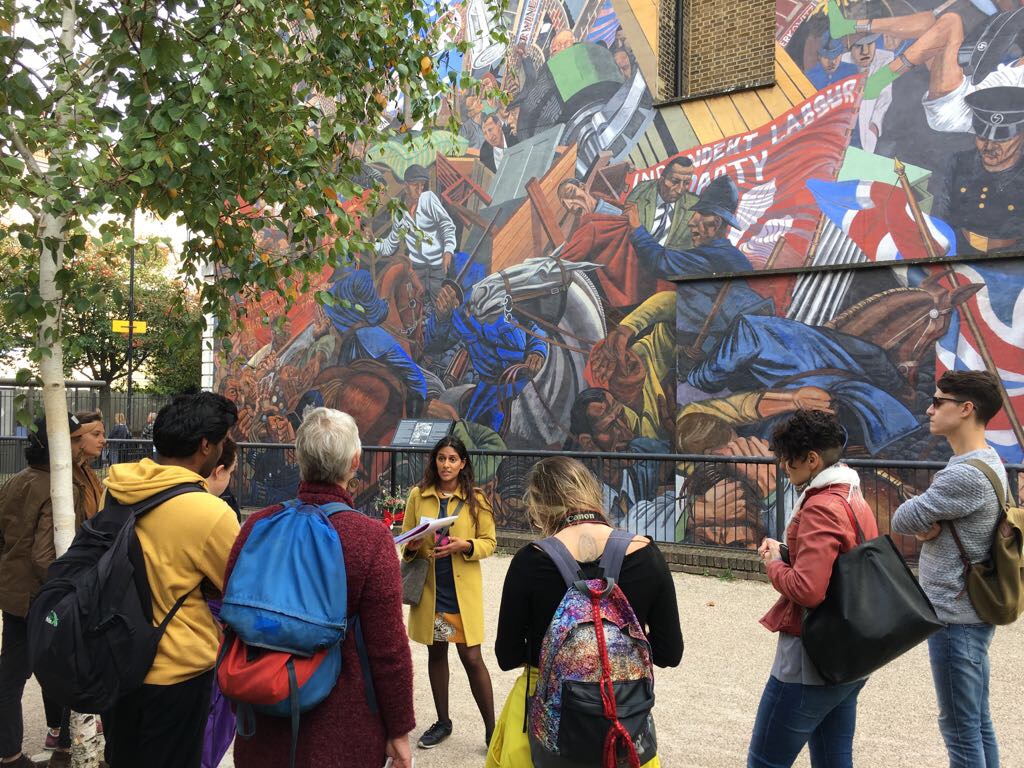
Join the Migration Museum team for a walking tour as part of Backyard Biennial and journey with us through the streets of Whitechapel and the East End to discover the lives of people from around the world who have shaped the area. From silk weavers to civil rights activists and market traders, we will walk in the footsteps of countless generations of people who forged lives for themselves, and in doing so, shaped our lives and the East End that we know and love today.
The tour will start and finish at Whitechapel Gallery and will last approximately 1 hour.
Wednesday 15 July – Sunday 6 September Venue: Whitechapel Gallery, 77-82 Whitechapel High Street, London E1 7QX Free – no booking
Do you have a migration story you’d like to share?
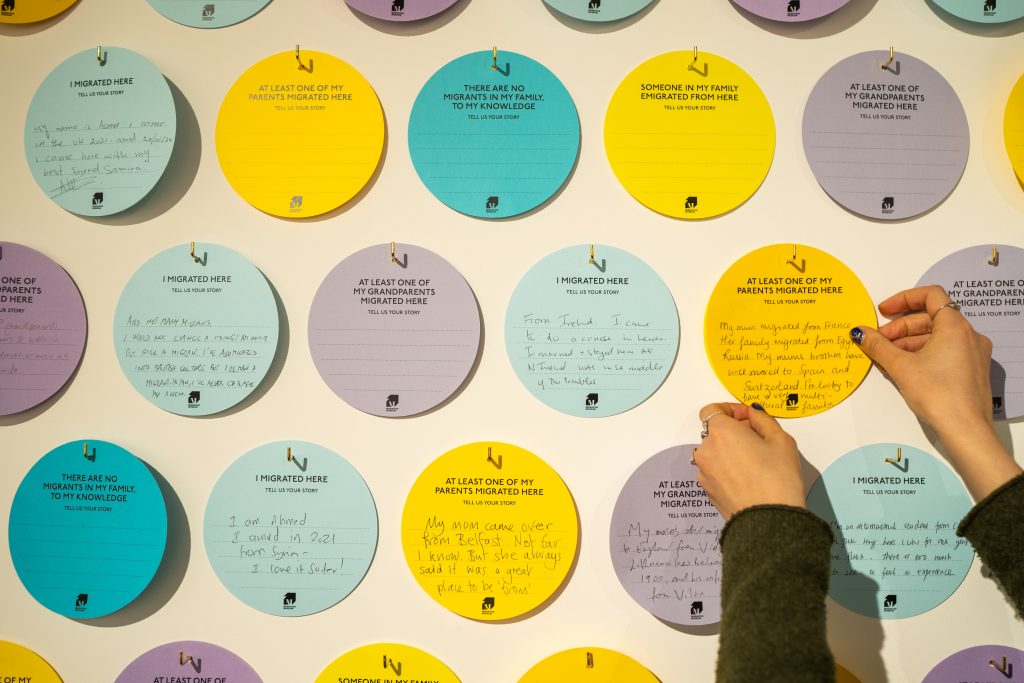
Visit our story disc display at the Whitechapel Gallery as part of Backyard Biennial: East and add your story to the Migration Museum’s growing collection of over 10,000 stories.
The Migration Museum wouldn’t exist without people’s stories. This display represents just a few of the thousands of personal migration stories shared with us by visitors over the years.
Your contributions will add to our growing collection ahead of the Migration Museum’s permanent home opening on Crutched Friars, just a 10-minute walk from Whitechapel Gallery, in 2028.
Backyard Biennial: East is an 8-week, free, summer arts festival initiated by Whitechapel Gallery in collaboration with more than 40 local partners across East London.
Titled East and featuring exhibitions, installations, screenings, performances, workshops, residencies, walks, open studios and special events, this first iteration of Backyard Biennial will celebrate the unique historic, cultural and creative identity of the East End, and pay tribute to its many diverse communities and industries.
The Migration Museum is proud to have partnered with the Hay Festival to bring you the personal migration stories of some of the brilliant speakers at this year’s celebration of literature, arts and culture.
We invited speakers at the festival to share their migration stories in the form of short videos and handwritten story discs.
We are honoured to share these stories with you below – click on the images to watch the videos (the links open in Instagram).
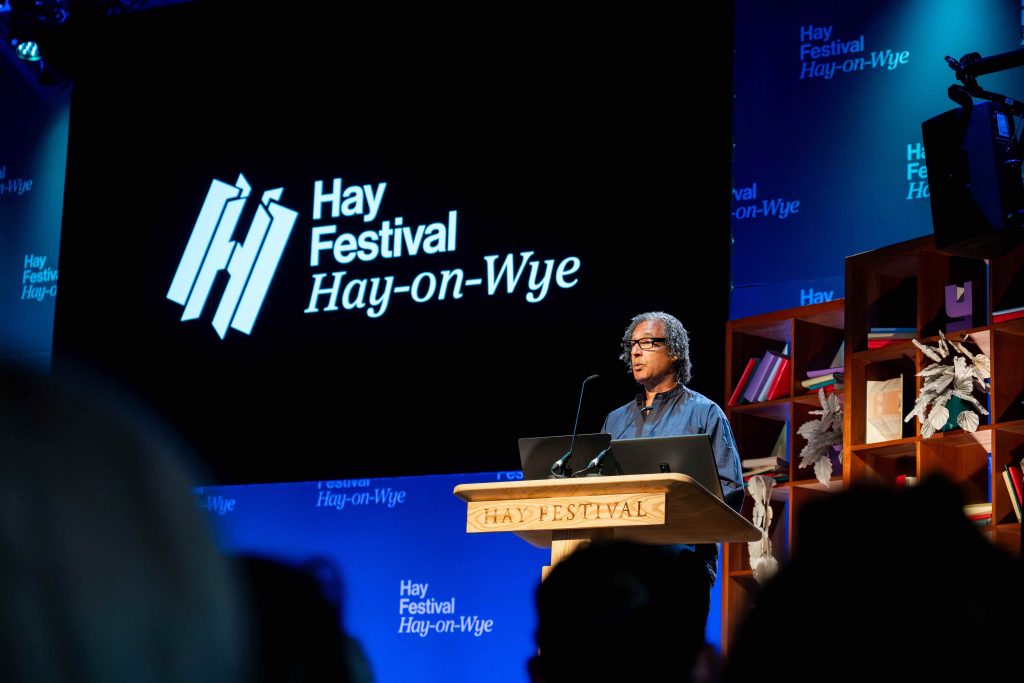
This year’s George Alagiah Memorial Lecture at the Festival, delivered by our Trustee, Professor David Olusoga OBE, was also in support of us – see below for more details and to watch the lecture.
We are truly grateful to the Alagiah Family, to the team at Hay, and to all of the speakers who shared their migration stories with us.
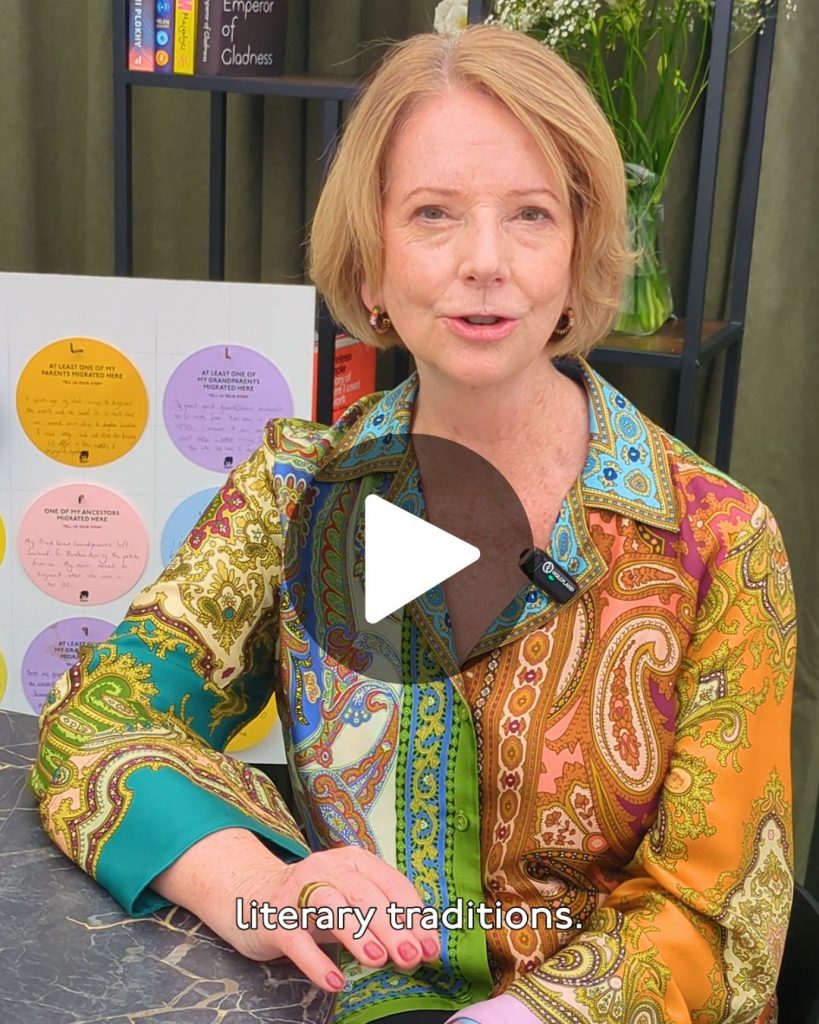
Julia Gillard
Former Prime Minister of Australia
“My family are not singers. We used to joke that we were the only non-singing Welsh on the planet. My father continued to follow Wales in the rugby, and he definitely wanted us to understand Wales’ literary traditions.”
Hear from Julia Gillard, former Prime Minister of Australia, as she shares her family’s story of emigrating from Barry in south Wales to Adelaide, South Australia, in 1966. Her family arrived as one of the many ‘Ten Pound Poms’ – a scheme that offered subsidised passage to Australia for over a million British citizens.
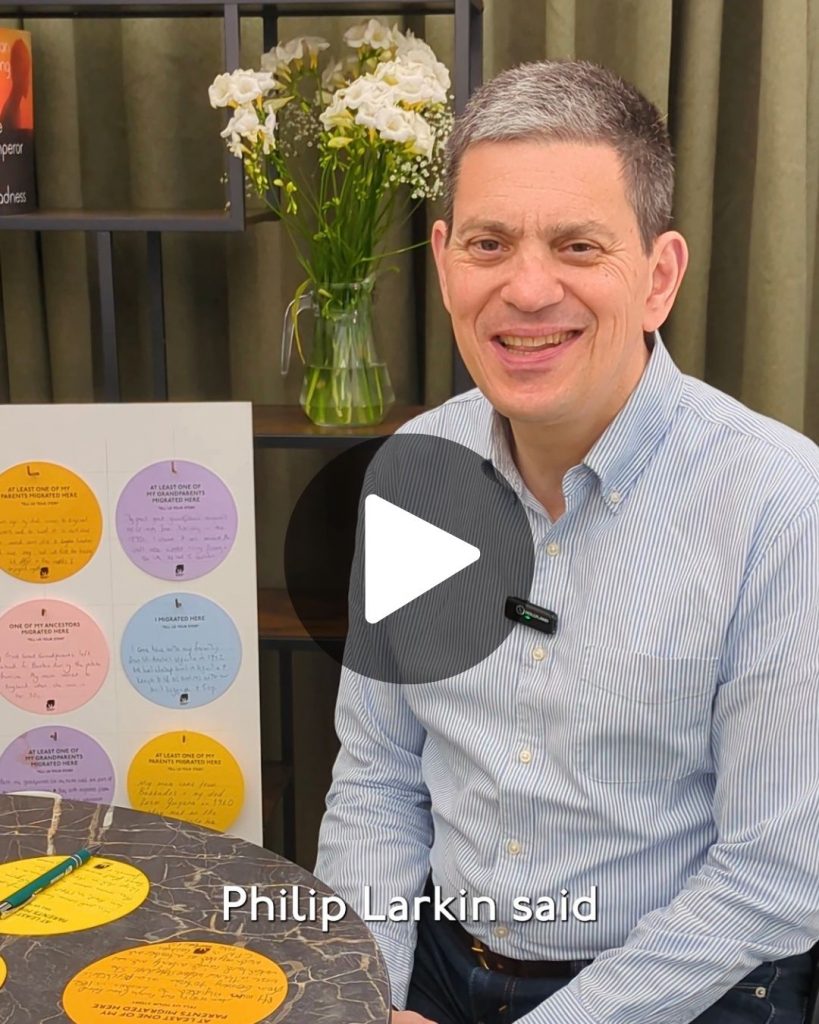
David Miliband
President of the International Rescue Committee and former UK Foreign Secretary
“I think that your parents always shape you. Philip Larkin said they f*** you up, whatever. My parents didn’t f*** me up. They provided an incredibly secure and loving home for my brother and I.”
Hear from David Miliband, President of the International Rescue Committee and former UK Foreign Secretary, as he shares how his parents came to the UK as Jewish refugees fleeing Nazi persecution – his dad from Belgium and his mum from Poland – and reflects on how stories like theirs have always been part of British history.
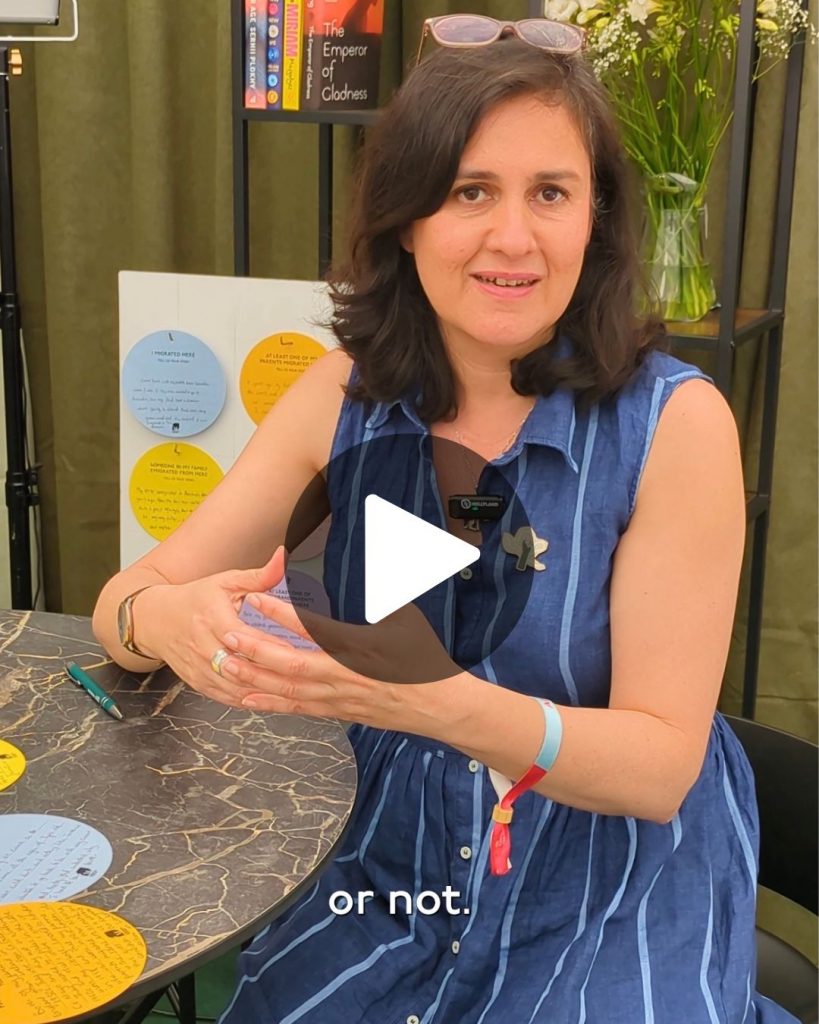
Kamila Shamsie
Author
“A lot of people often talk about home as though it is a single place and you’re expected to have one answer or to feel conflicted.”
Hear from award-winning Pakistani and British novelist Kamila Shamsie as she shares her story of moving from Pakistan to the UK through a specialist visa category for writers that no longer exists – and of following in the footsteps of her mother and grandfather, who both went to school in England.
Liv Little
Author, creative director and broadcaster
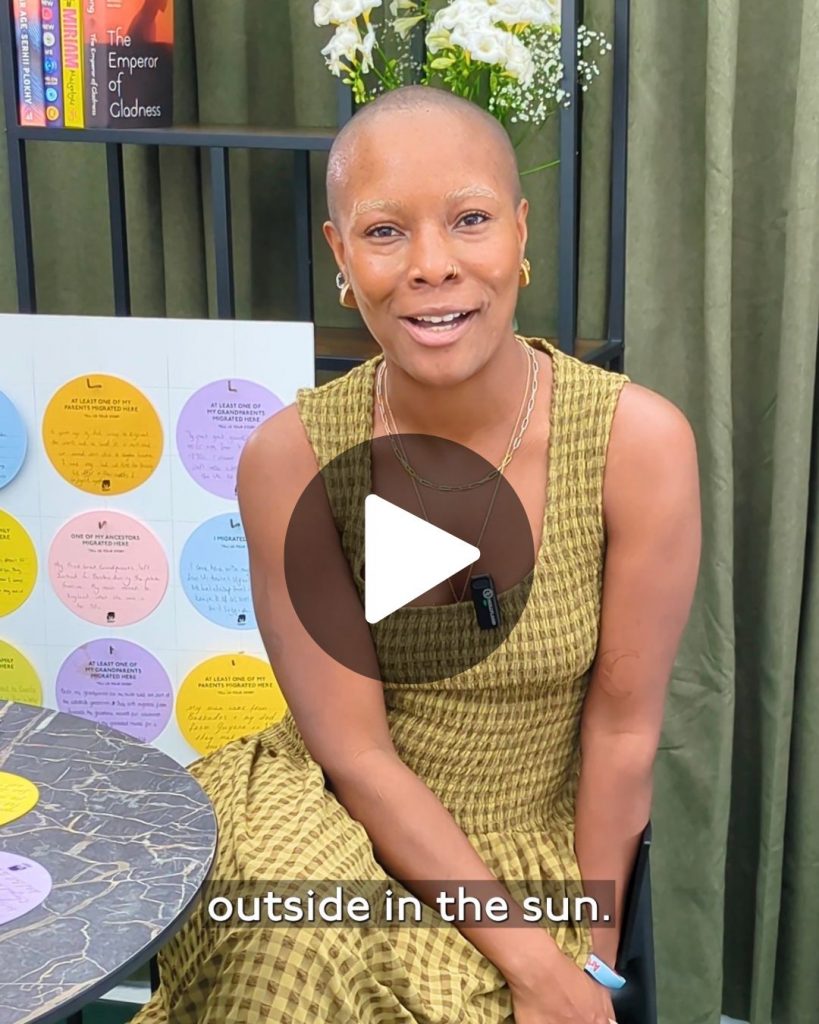
“Without their love story, I wouldn’t be here, so thank you mum for smoking all of dad’s cigarettes at the house party – it’s great.”
Hear from author, creative director and broadcaster Liv Little as she shares the story of how her Jamaican-born dad met her mum at a house party one summer’s evening in London – and fell madly in love.
Tahmima Anam
Author
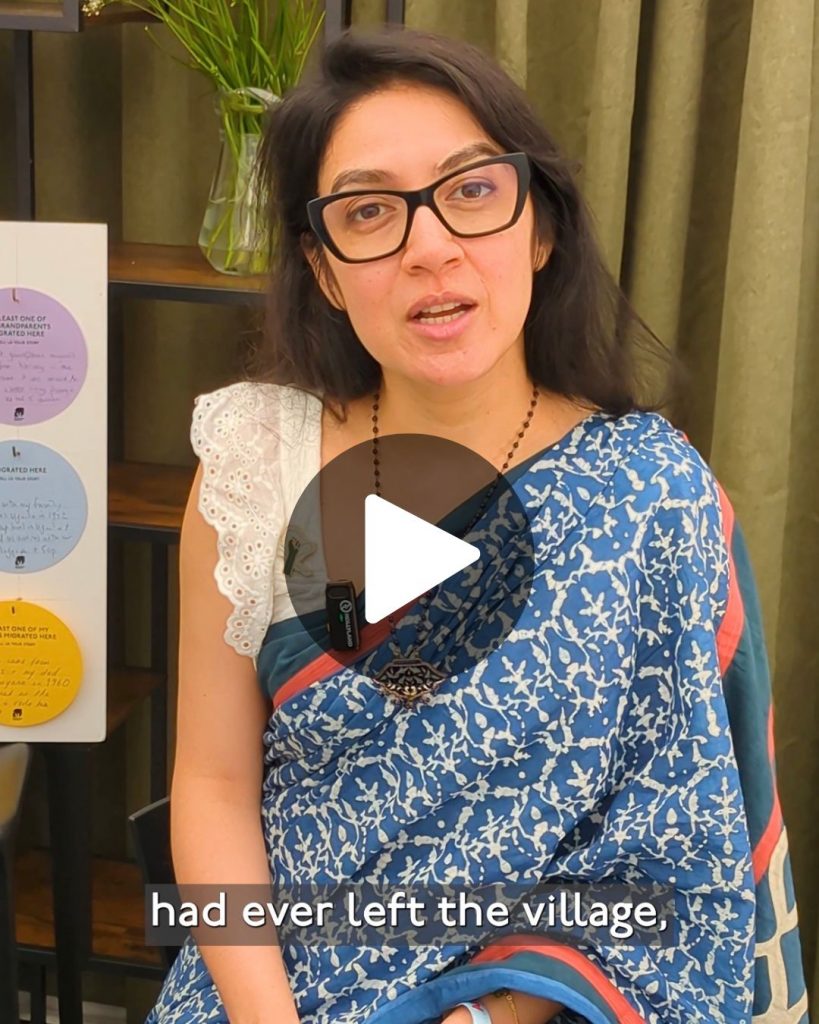
“He was never expected to leave that village. No one in his family had ever left the village. But when he was a teenager, he was given a scholarship and he was able to leave the village and travel to Calcutta, which was the nearest big city.”
Hear from Bangladeshi-born British writer, novelist and columnist Tahmima Anam, as she shares her family’s incredible transnational migration story – from a small village in Muslim Bengal, to Kolkata, Bangladesh, Paris, and finally, London.
Kirsty Lang
Journalist and broadcaster
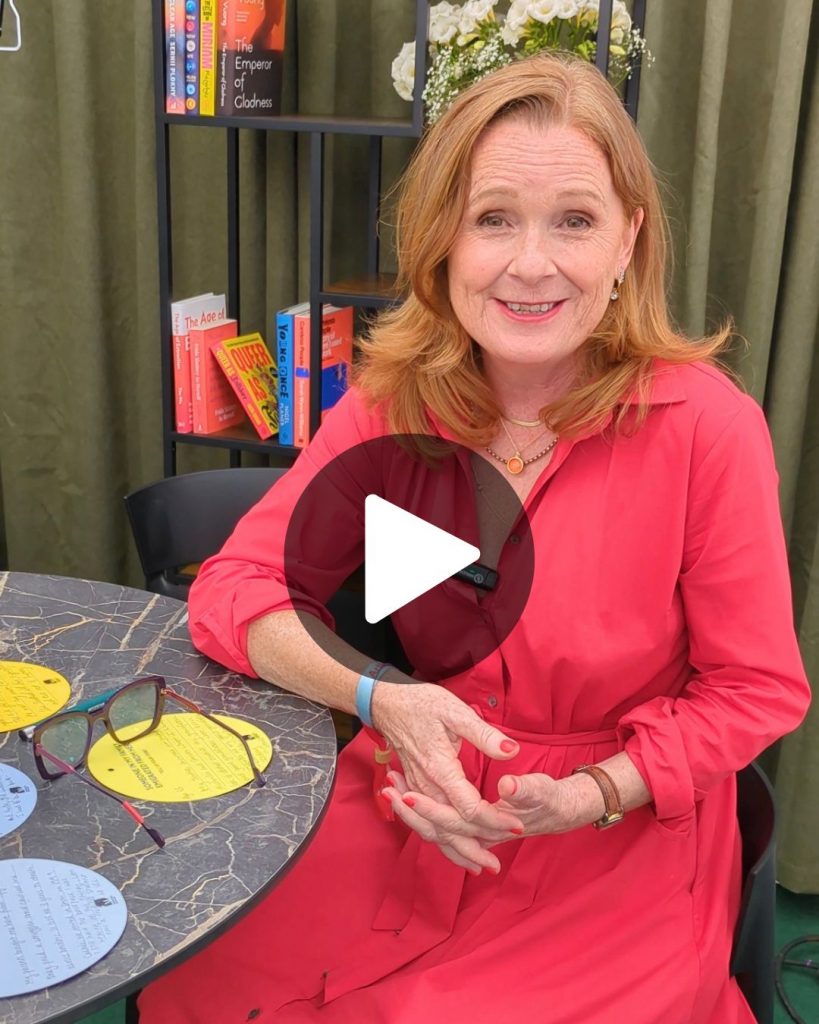
“My grandfather was born in Calcutta, and that’s because my great-grandfather, also Scottish, was working for the Indian civil service.”
Hear from BBC journalist Kirsty Lang as she shares her family’s deep connections to the British Empire, and a story of emigration that stretches from Scotland and India all the way to Australia.
The George Alagiah Memorial Lecture – in support of the Migration Museum
This year’s George Alagiah Memorial Lecture at the Hay Festival was in support of the Migration Museum.
George Alagiah OBE was a passionate supporter, a remarkable trustee and a true friend and champion of the Migration Museum – and this annual lecture celebrates the issues central to his work: migration, the power of the global majority and questions of representation.
The lecture was delivered by Migration Museum Trustee Professor David Olusoga, who discussed the history and legacy of the British Empire and how colonial nostalgia is shaping contemporary geopolitics, with journalist and broadcaster Kirsty Lang. The lecture was introduced by Aditi Anand, our Artistic Director.
Please note: the above link requires a Vimeo account to watch. You can sign up for free if you don’t yet have one.
Image credits: Stills from collaborative reels recorded by the Migration Museum at the Hay Festival (Credits: Migration Museum) Professor David Olusoga OBE delivers the George Alagiah Memorial Lecture in support of the Migration Museum at the Hay Festival (Credit: Adam Tatton-Reid and Hay Festival)
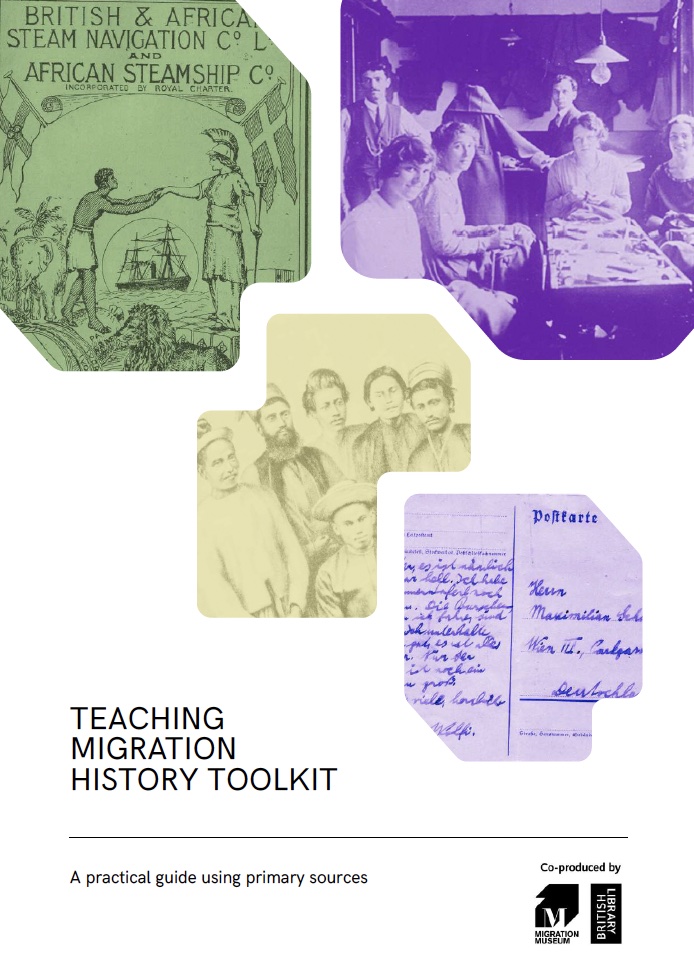
We are delighted to announce the launch of our new Teaching Migration History Toolkit, co-produced with the British Library.
What is the toolkit?
Developed with the help of teachers, this toolkit combines practical tips from the Migration Museum’s expert learning team with primary source examples from the British Library to offer a practical guide to teaching about migration in your classroom.
Use this toolkit to discover how you can use historical sources to teach migration history sensitively and with confidence, how personal stories can bring the subject to life, and how to navigate a subject that is heavily politicised by society.
Who is it for?
While this toolkit has been primarily designed for and with teachers, we hope that it’s a useful resource for anyone who wants to engage meaningfully with this subject.
We hope that it will inspire greater exploration of migration themes in classrooms, learning settings and beyond across the UK.
How was it created?
This toolkit is the result of a two-year partnership between the Migration Migration and the British Library’s learning teams. During this time we realised that it isn’t enough to just create migration history resources; we need to equip teachers with the skills to have conversations about migration and to navigate this complex topic.
How to use the toolkit
There are countless positive and uplifting stories of migrants’ contributions to Britain, which we encourage you to use in your classroom. But we’ve focused here on the most challenging aspects of teaching migration, identifying six topics, in response to teachers’ feedback:
Championing lived experience
Facilitating difficult conversations
Navigating the politics
Language and terminology
Dealing with racist language and imagery
Challenging myths, narratives and stereotypes
Each section uses a combination of primary source materials and top tips from the Migration Museum to offer guidance on how to deal with these challenging aspects of teaching migration history.
Download and explore the toolkit and related resources
To accompany the toolkit, we’ve also produced a terminology resource, defining some of the key language you will be using when teaching about migration and related topics, with explanations and guidance as to why certain terms are preferable over others.
The British Library have also collated a range of accompanying resources on Padlet, including animations, timelines and more primary sources.
The Migration Museum is proud to support the Local History Hub’s first ‘Local History Day’ for schools. A day for young people to explore the people, places, stories and objects connected to their local area.
In this blog post, our Learning Manager Tia Shah explores why teaching local history is such a great way of engaging young people on the topic of migration – and highlights some digital resources to get you started.
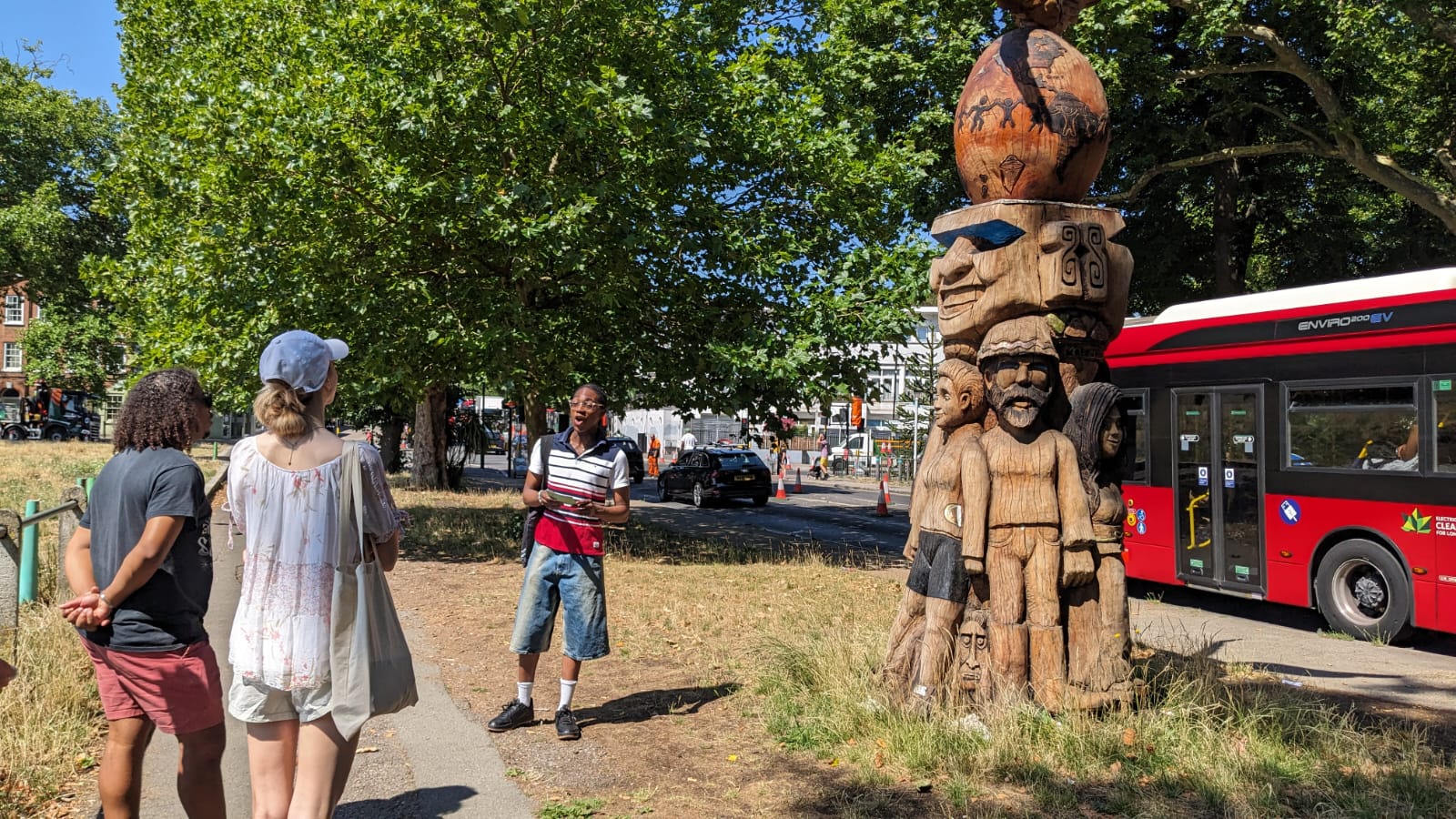
A stop on a walking tour of south-east London, researched and delivered by a young person as part of a work experience placement with the Migration Museum in summer 2025 (Photo: Migration Museum)
Learning about local history is one of the best ways to get young people curious about the past. It allows them to uncover stories hidden in the places they see every day, highlighting that history exists all around us.
By exploring physical traces of the past in the buildings, statues and roads around them, and learning about the people who once lived inour communities, students can gain a personal connection to history. They can also see how their stories, their families, and their lives are part of shaping the world around us. Exploring local history can foster a sense of belonging and pride in where we live, and an understanding of our place in the world.
Sharing local histories is also a great way of exploring the topic of migration. Whether this is learning about why the demographics of your school have changed over time, why your local high street has lots of Indian and Chinese takeaways on it or investigating why people settled in your local area – migration stories are all around us.
Big historical events can be brought to life through a local lens – like the departure of the Mayflower from Plymouth in 1620 or the legacy of the Romans in Colchester.
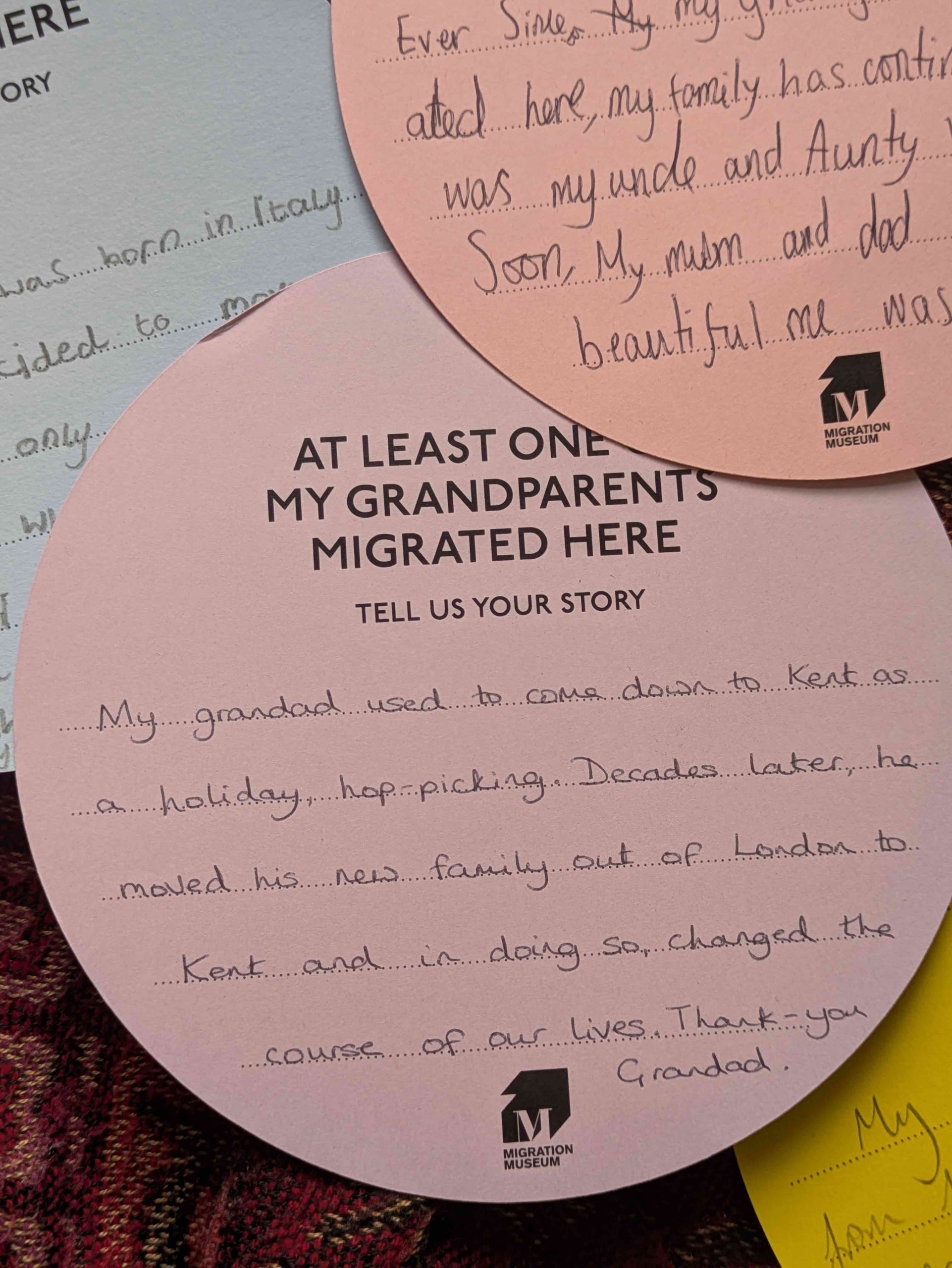
Story disc shared by a visitor to the Migration Museum (Photo: Migration Museum)
At the same time, forgotten stories of internal migration can be shared – like the seasonal journeys of the ‘Kent Hoppers’, who moved from cities to Kent for the hop harvest every year, or the ‘Herring Girls’ who followed herring down the coast from Scotland to East Anglia. All of these stories reveal just how profoundly migration has shaped communities in the UK.
When it comes to exploring these stories, local museums are an invaluable resource at your fingertips. Often free and supported by dedicated learning teams, they offer rich opportunities to step beyond the classroom to discover local history, through workshops, exhibitions, and even local walking tours.
Alongside this, there are plenty of digital resources which make it easy to bring local history into lessons in engaging and accessible ways.