Archives

Migration Museum partners with museums and galleries to launch new UK-wide Community Curators programme

The Migration Museum is partnering with five museums and galleries across the UK to launch a new programme bringing diverse voices, lived experiences, and perspectives into the creation of a series of displays and creative outputs exploring migration themes in 2027 – and the Migration Museum’s new permanent home in 2028.

The Migration Museum is partnering with:
– Baltic Centre for Contemporary Art
– Food Museum
– Glasgow Life Museums
– Hastings Museum & Art Gallery
– The Museum of Free Derry

Together, we will recruit 10 Community Curators: passionate people who are eager to work with local communities and showcase local talent.

Our Community Curators will co-create displays and creative outputs exploring migration stories in their local areas. These displays will be shown at partner venues from Spring 2027, and will help shape the Migration Museum’s permanent home in London, opening in 2028.

Recruitment for Community Curators in each location begins today (Wednesday 22 July), with applications open until 2359 on Sunday 23 August. More information on how to apply can be found here.

Announcing the launch of the new programme, Mona Jamil, Head of Civic Engagement at the Migration Museum, said:

“At the Migration Museum, we explore how the movement of people to and from these shores across the centuries has shaped who we are. As we prepare to open our permanent Migration Museum in 2028, our vision is to build a new cultural destination that is shaped by and speaks to people and communities across the UK.

“Our Migration Museum Community Curators Programme is a vital step in making this vision a reality. We’re thrilled to be partnering with museums and galleries across the UK who share our belief that a more inclusive future is possible. If you’re passionate about working within local contexts to highlight stories of diversity and bring voices to life, we encourage you to apply. This is a skills-building programme, so no curatorial or museum experience is required. We particularly welcome applications from people who have faced barriers to opportunities in the cultural and creative sectors.”

Annie Bedford, Interim Head of Learning/Senior Producer (Communities), Baltic Centre for Contemporary Art said: 

“The Community Curators programme provides an exciting opportunity for two people in the North East of England to share their enthusiasm, knowledge and perspective on migration with local and national audiences. We’re excited to play a role in developing local creative and curating talent, to learn from the community curators and expand our understanding of migration, and to work together to bring migration stories to broad audiences.” 

Nathalie Morris, Head of Interpretation, Collections and Learning at the Food Museum, said:

“The Food Museum is delighted to be involved in this dynamic and exciting programme. Co-production with our communities is an essential part of how we work, and we’re looking forward to collaborating with the Migration Museum and our two Community Curators to explore food’s integral role in creating and celebrating culture and community. Food is a potent symbol of the richness and diversity that comes from migration and is a powerful means by which cultures are sustained and shared. 

This programme is an excellent opportunity for anyone interested in telling stories about their food and community through museum exhibitions, and we’re thrilled to partner with the Migration Museum as it works towards opening its permanent home in London in 2028.”

Nelson Cummins, Senior Curator (Empowering Curators Fellow) at Glasgow Life Museums, said: 

“This project represents an exciting opportunity to work in partnership with the Migration Museum and community curators to explore how migration has shaped industry and business in Glasgow – key aspects of our city’s history and social identity.

“Glasgow wouldn’t be Glasgow without migration, so this is a welcome and valuable chance to examine its significance, and support the Migration Museum’s work toward its new home. Migration is an integral part of the UK’s past and present, and alongside being explored through the collections of current museums, it deserves a permanent museum that acknowledges its importance to everyday life across the country.”

Cllr Julia Hilton, deputy leader of Hastings Borough Council and lead councillor for shaping places, regeneration and community wealth building, said: 

“We are delighted to partner with the Migration Museum and two Community Curators to explore migration stories through the lens of the natural and built environment. Hastings Museum & Art Gallery is dedicated to fostering meaningful participative curatorial practice, and we welcome the opportunity for our community to creatively contribute to the national narrative that will anchor the Migration Museum’s new permanent site. 

“By sharing and activating stories that highlight the diverse, complex, and deeply human realities of movement, we hope to ensure that future generations who make Hastings their home find their lived experiences honoured and visible as part of our shared heritage.  We look forward to welcoming our Community Curators and embarking on this work together.”

Adrian Kerr, Curator at the Museum of Free Derry, said:

“This is a very exciting programme for us to be involved in. It fits so well with our project for archiving the rights of all in our society. It would be great for people to get involved in this and to help record their own community’s history, so we have that history directly from those involved.

We’re really looking forward to seeing the outcomes from this on important themes – in our case what it’s like to be part of one of the new communities here, and how the issue of our Irish language is being addressed.

The development of the Migration Museum is also very important. We’re living in a time of increased agitation and lies around migration, and it is vital that there is a space that shows how new communities are of great benefit for all of us, bringing in diversity and culture that enriches all of our lives.”

The Migration Museum Community Curators programme is supported using public funding by the National Lottery through Arts Council England – thanks to National Lottery players. The programme is also generously supported by funding from University College London’s Institute of Education.

Click here to download and view the press release
 

About Baltic Centre for Contemporary Art

Baltic Centre for Contemporary Art is a major international centre for art situated on the south bank of the River Tyne in Gateshead, England. It has welcomed over 10 million visitors since opening in July 2002. Baltic presents a distinctive and ambitious programme of temporary exhibitions and events and is a world leader in the presentation and commissioning of contemporary visual art. Housed in a landmark ex-industrial building, Baltic houses 2,600 square metres of art space, making it one of Europe’s largest dedicated contemporary art institutions.

With no permanent collection, every visit offers something new, inviting audiences to engage with thought-provoking art, enjoy panoramic views from the viewing platforms, and experience contemporary creativity in an accessible and welcoming space.

Find out more at: baltic.art


About the Food Museum

The Food Museum is located in East Anglia – ‘Britain’s Breadbasket’. Their mission is to connect people with where our food comes from and the impact of our choices: past, present and future. 

We all eat. Food is culture and is an avenue for everyday creativity. The Food Museum’s collection is rooted in East Anglia and is used to tell broad and inclusive stories.

From cheese-making to brewing, historic breads to seasonal eating, the Food Museum engages audiences with the heritage of food and the communities who grow and make it. They explore themes connected by food – social, historical, technological, industrial, environmental – and to give visitors hands-on experiences which bring processes alive, teach skills and share memories.

The museum began life as a volunteer-run rural life museum in 1967 and became the Food Museum in 2022. In 2025 they received £5 million from the National Lottery Heritage Fund and Mid Suffolk District Council to fund five years of investment in their historic buildings, collaborative programming, improved facilities, and greater community involvement.

Find out more at: foodmuseum.org.uk


About Glasgow Life Museums 

Glasgow Life Museums care for some of Scotland’s most celebrated museums and galleries, offering unforgettable experiences across art, history, transport, religion, design and social heritage. From iconic destinations including Kelvingrove Art Gallery and Museum, Riverside Museum, the Burrell Collection, and the Gallery of Modern Art (GoMA) to historic sites including Provand’s Lordship and St Mungo Museum of Religious Life and Art, each venue tells a unique part of Glasgow’s story. Free to enter, they invite visitors of all ages to discover world-class collections, inspiring exhibitions and the rich cultural heritage that makes Glasgow one of Europe’s great museum cities.

Find out more at: glasgowlife.org.uk/museums


About Hastings Museum & Art Gallery

Hastings Museum & Art Gallery is an award-winning, vibrant, community-focused museum. We bring together local stories and global perspectives through our collections of art, natural history, archaeology, and world cultures, creating opportunities for people of all ages and backgrounds to explore the past, understand the present and imagine the future together.

Founded in 1890 by the Hastings & St Leonards Museum Association and transferred into public ownership in 1905, the museum has grown into an Arts Council England National Portfolio Museum and a much-loved cultural space for the local community and visitors from around the world. Today, we are part of Hastings Borough Council, working with the support of the Museum Committee, the Hastings & St Leonards Museum Association, and our own Community Panel.

From the remarkable Durbar Hall, a rare example of an Indian palace interior outside the Indian subcontinent, to collections that reveal the stories of Hastings’ people, places and landscapes, the museum connects local experiences with global histories.  We are committed to making Hastings Museum & Art Gallery more open, inclusive, and collaborative. Our approach is rooted in participation and co-production, working alongside communities to share diverse voices and ensure that the stories we share reflect the people and places that make Hastings unique. Through exhibitions, events, learning programmes and community-led projects, we create spaces for curiosity, conversation, and creativity. 

Find out more at: hmag.org.uk


About the Migration Museum

The Migration Museum is building the UK’s missing museum, an inspiring new cultural destination exploring how the movement of people to and from these shores across the centuries has shaped who we are and where we’re going.

Over the past decade, our award-winning team has worked with a wide range of partners and collaborators to co-create interactive, story-led exhibitions and events from a series of temporary and pop-up venues, engaging audiences that are younger and much more ethnically and socio-economically diverse than other museums and heritage organisations. Our learning programme reaches thousands of students each year via facilitated workshops, and many more via teacher training and partnerships. And our Migration Network convenes museums, heritage organisations, charities, academics and charities from across the UK to encourage and support greater exploration of migration themes. 

We now have a once-in-a-generation opportunity to create a new permanent Migration Museum in the heart of the City of London, opening in 2028, powered by a network of pop-ups and partnerships across the UK.

Find out more at: migrationmuseum.org


About the Museum of Free Derry 

The Museum of Free Derry is situated in the historic Bogside area of Derry, within Glenfada Park – the very ground where the Bloody Sunday massacre took place. Founded in 2007 by The Bloody Sunday Trust, the museum is dedicated to preserving and presenting the history of Derry during the pivotal period from 1968 to 1972, known as ‘Free Derry’. This era is marked by profound events such as the civil rights movement, the Battle of the Bogside, Internment, Bloody Sunday, and Operation Motorman.

At its core, the museum tells the story of how a working-class community, long oppressed, rose up to demand justice and equality. The narrative is conveyed from the perspective of the Free Derry community, those who were most deeply involved in and affected by these historic events. The museum itself is housed in what was once a derelict housing block in Glenfada Park, a location that witnessed both the horror and heroism of Bloody Sunday.

Their contemporary building houses an extensive archive of approximately 20,000 items related to this critical period. They are currently developing the North West Civil Rights Archive, a project aimed at making these materials more accessible through research, accumulation, and digitisation. The museum is more than a repository of the past; it is a living space where the ongoing struggle for civil and human rights can be explored, both in a historic and contemporary context.

The Museum of Free Derry’s mission is not just to share the history of Free Derry, but to encourage visitors to see the struggle for human and civil rights as an ongoing, contemporary undertaking. It exists to honour the memory of those who fought and died for their rights and to connect their stories with global movements for freedom and social justice.

Find out more at: museumoffreederry.org

Supported by:
This programme is supported using public funding by the National Lottery through Arts Council England. Thanks to National Lottery players. The programme is also generously supported by funding from University College London’s Institute of Education.


Image credits: Migration Museum Community Curated Exhibition in Lewisham 2024 (Photo: Migration Museum / Elzbieta Piekacz); Midsummer event, Courtesy of Baltic Centre for Contemporary Art  (Photo: Sayarosemedia); Visitors engage with displays at the Food Museum (Photo: Food Museum); Photo courtesy of Hastings Museum & Art Gallery; Visiting Riverside Museum (Photo: Glasgow Life); Visitors engage with displays at The Museum of Free Derry (Photo: The Museum of Free Derry)

Squaring the Mile: How we’re engaging our new local communities in the City of London

Our Public Engagement Coordinator Frances Ewings at an engagement event at Barts Hospital (Photo: Migration Museum)

As we prepare to open our new permanent home in the City of London, Frances Ewings, our Public Engagement Coordinator, explains why the Square Mile is such a fitting location for the Migration Museum – and how we’ve been engaging with our new local communities.

“Isn’t it just full of finance bros?” This is just one of the surprised responses we’ve heard when telling people that the Migration Museum is building a permanent venue in the City of London. When it launches in 2028, it will be the UK’s only museum solely dedicated to the topic of migration – but why build a cultural venue examining the UK’s diverse past in the heart of a landscape famed for suits and skyscrapers?

Look a little closer at London’s history and perhaps the location isn’t so surprising. After all, the City is where Roman settlers founded Londinium, which became the London we know today – in fact, sections of the original wall they built around the city can be found just metres from the museum’s new site. City street names also give a clue to a not-so homogenous past – Lombard Street, Old Jewry and India Street to name a few.

The City’s diversity doesn’t just lie in the history books. According to the last census, the Square Mile is home to around 8,600 residents – over a third of whom identified with a non-UK identity. Add to this one of the most international workforces in the world: 40 percent of the 678,000 workforce populating the City by day come from the European Economic Area (EEA)*, or the rest of the world.

Through our community engagement work at our previous venues in Lambeth and Lewisham, which saw co-produced exhibitions and an award-winning welcome, we understand the important role a museum can play in the local area. Reflecting the migration links of the area surrounding our new home is integral to the success of the new museum.

Migration Museum story discs contributed by visitors and participants (Photo: Migration Museum)

With this in mind, we set about work early. In 2024 we secured funding from City Bridge Foundation to support our community engagement. This has enabled us to  go out and meet communities where they are – an important step in removing barriers to cultural participation. 

A huge part of this work has been our story collection project, whereby we have visited community centres, charities, places of worship, hospitals, libraries and corporate employee resource groups to unearth 5,000 hidden – or not so hidden – stories of migration. 

Highlights have included hosting an outreach workshop with an ESOL class at the Guild Church of St Katharine Cree. The church focuses on serving City workers in essential, but often precarious and low paid jobs – so-called ‘hidden’ roles – and is home to the Joseph Centre for Dignified Work

Migration Museum outreach session with an ESOL class at St Katherine Cree (Photo: Migration Museum)

The majority of the class we met were Latin American and part of cleaning, maintenance and security personnel in the City. We shared stories and exhibits from past Migration Museum exhibitions, and they shared their first-hand experiences of immigration – giving voice to those often overlooked and proving that there’s more to the City than just red-braced bankers. 

We have also enjoyed meeting hyper-local audiences at the Community Table held at the Aldgate Centre – a mere four-minute walk from our permanent site. Run by the charity Shoreditch Trust, whose aims include strengthening community and inclusion in the City, the Community Table is a chance for locals from all walks of life to enjoy a meal together. A diverse group, we met City residents with migration stories from across the globe.

Migration Museum outreach session at Community Table at the Aldgate Centre (Photo: Migration Museum)

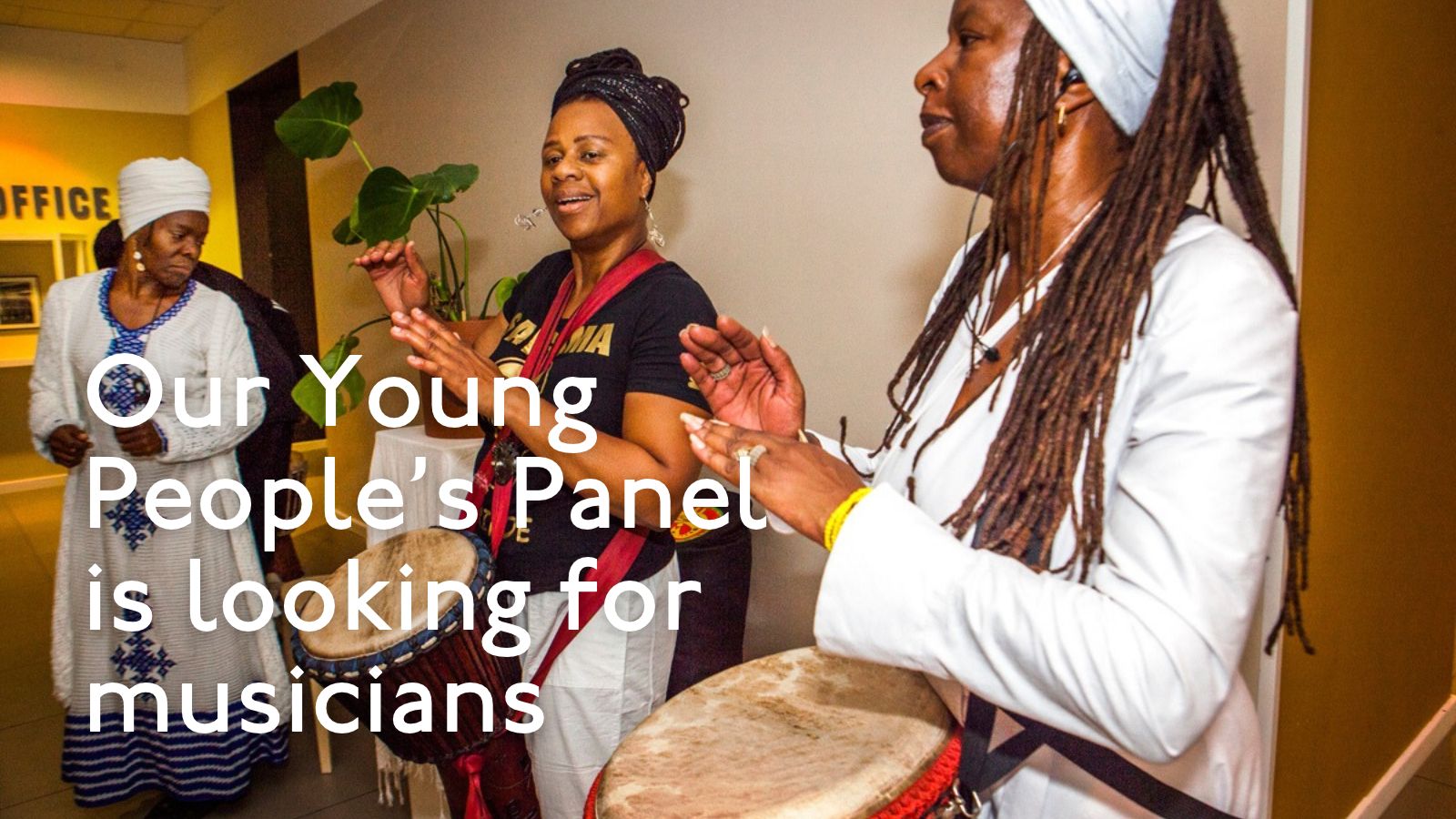
City Bridge funding has also made possible the formation of our People’s Panel – a group of over 50 community-minded individuals who, through collaboration and consultation, will help shape key aspects of our new museum.

We’ve attended iconic venues such as St Paul’s Cathedral, where we met members of the City’s other international cohort – tourists. They are an important part of the City economy and will be a valued audience at our permanent museum. Through our recent outreach work we have witnessed tourists’ appetite for UK emigration history too. Many, particularly North American, have expressed interest in their family’s UK-roots. We are, after all, a museum dedicated to migration – both emigration from and immigration to the UK.   

Migration Museum outreach session at St Paul’s Cathedral (Photo: Migration Museum)

We look forward to building on these relationships, forging new ones and finally welcoming all when we open our museum doors in 2028. 

If you are part of a community group in London and are interested in the Migration Museum’s free outreach workshops, contact info@migrationmuseum.org for more. 

*The EEA includes EU countries and also Iceland, Liechtenstein and Norway

Our community engagement work is supported by City Bridge Foundation, the funding arm of The City of London Corporation’s charity, Bridge House Estates (1035628)

Migration Museum at the Backyard Biennial: East

We are excited to be part of Backyard Biennial: East, a free, summer arts festival initiated by Whitechapel Gallery in collaboration with more than 40 local partners across East London.

We are running three free activities during the festival. See below for more information and how to book your place:

Wearing Our Stories: Stitching Identity Through Football

Saturday 18 July 2026, 2pm–3.30pm
Whitechapel Gallery, 77-82 Whitechapel High Street, London E1 7QX
Free – click here to book via Whitechapel Gallery website

Ahead of the Men’s World Cup final, the Migration Museum will be hosting artist Nicole Chui to lead a participatory workshop exploring football, migration, race, and belonging as part of Backyard Biennial: East at the Whitechapel Gallery.

Drawing on her practice engaging football culture, fashion, ESEA identity, and protest, Chui will guide participants in stitching onto football shirts – weaving in personal journeys of migration. Whilst stitching, we will hold an open conversation about national identity, and what it means to feel at home – on and off the pitch. Participants will be able to take their shirts home and wear them with pride!

Find out more and book your place here


Whose Streets? Our Streets: A Migration Walking Tour of the East End

Saturday 18 July 2026, 12pm–1pm
Meet at: Whitechapel Gallery, 77-82 Whitechapel High Street, London E1 7QX
Free – click here to book via Whitechapel Gallery website

Join the Migration Museum team for a walking tour as part of Backyard Biennial and journey with us through the streets of Whitechapel and the East End to discover the lives of people from around the world who have shaped the area. From silk weavers to civil rights activists and market traders, we will walk in the footsteps of countless generations of people who forged lives for themselves, and in doing so, shaped our lives and the East End that we know and love today. 

The tour will start and finish at Whitechapel Gallery and will last approximately 1 hour.

Find out more and book your place here


All Our Stories: Sharing Migration Stories

Wednesday 15 July – Sunday 6 September
Venue: Whitechapel Gallery, 77-82 Whitechapel High Street, London E1 7QX
Free – no booking 

Do you have a migration story you’d like to share?

Visit our story disc display at the Whitechapel Gallery as part of Backyard Biennial: East and add your story to the Migration Museum’s growing collection of over 10,000 stories.

The Migration Museum wouldn’t exist without people’s stories. This display represents just a few of the thousands of personal migration stories shared with us by visitors over the years.

Your contributions will add to our growing collection ahead of the Migration Museum’s permanent home opening on Crutched Friars, just a 10-minute walk from Whitechapel Gallery, in 2028.

Find out more


About Backyard Biennial: East

Backyard Biennial: East is an 8-week, free, summer arts festival initiated by Whitechapel Gallery in collaboration with more than 40 local partners across East London.

Titled East and featuring exhibitions, installations, screenings, performances, workshops, residencies, walks, open studios and special events, this first iteration of Backyard Biennial will celebrate the unique historic, cultural and creative identity of the East End, and pay tribute to its many diverse communities and industries.

Find out more