
“The world needs change now more than ever – and the Migration Museum is creating it” – a Q&A with Muna, one of our Young People’s Panellists
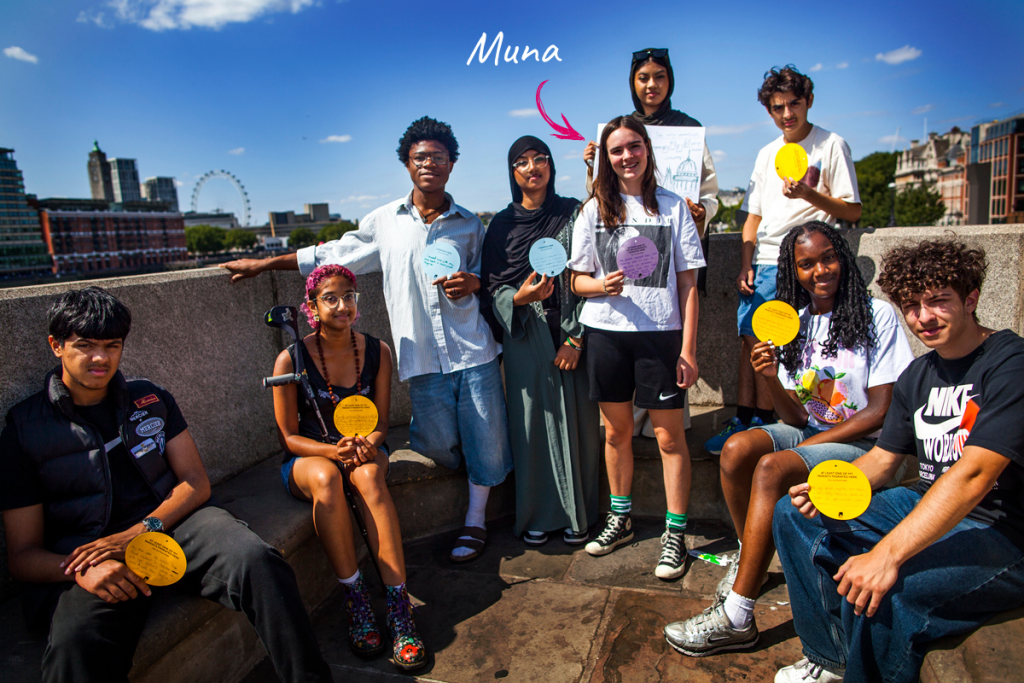
At the Migration Museum, we want to embed young people’s voices into the spaces we are creating. One of the ways we do this is through our skills-building work; for young people, this means creating meaningful experiences and opportunities to develop both professionally and personally, while getting real insight into and experience of the creative sector.
This Q&A is with Muna (aged 14) who has been involved in skills-building work at the Migration Museum over the past four years – through our Moving Stories: Lewisham competition and, most recently, as a member of our Young People’s Panel, a programme generously funded by City Bridge Foundation.
Read on to find out about the work we do and how it impacts the young people we are luckily enough to work with.
Why did you want to get involved with the Migration Museum?
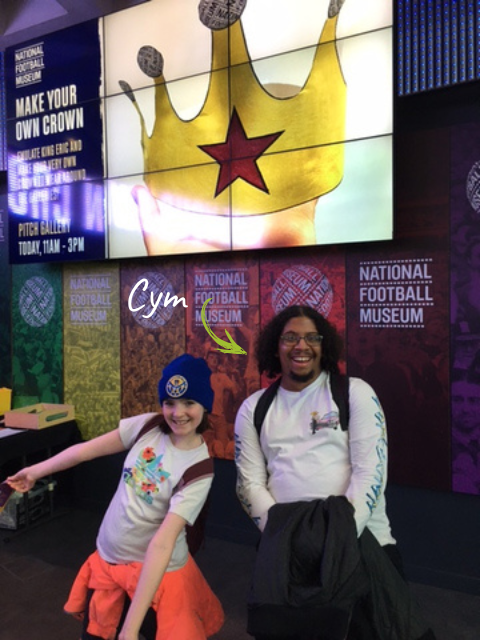
When I was in Year 5, a sweaty man called Cym* (he had cycled up a hill) came to my primary school to give an assembly all about the Migration Museum and a new contest they were running for young people called the Moving Stories competition. The brief was you had to submit a piece of art in any form that showed what migration meant to you.
I came home that day inspired. No-one had ever given an assembly like that before, and this competition was a perfect opportunity for me to explore art, history and stories, all of which I am passionate about. Also, I was shocked that I had never heard about this amazing museum, a mere bus ride away in Lewisham Shopping Centre.
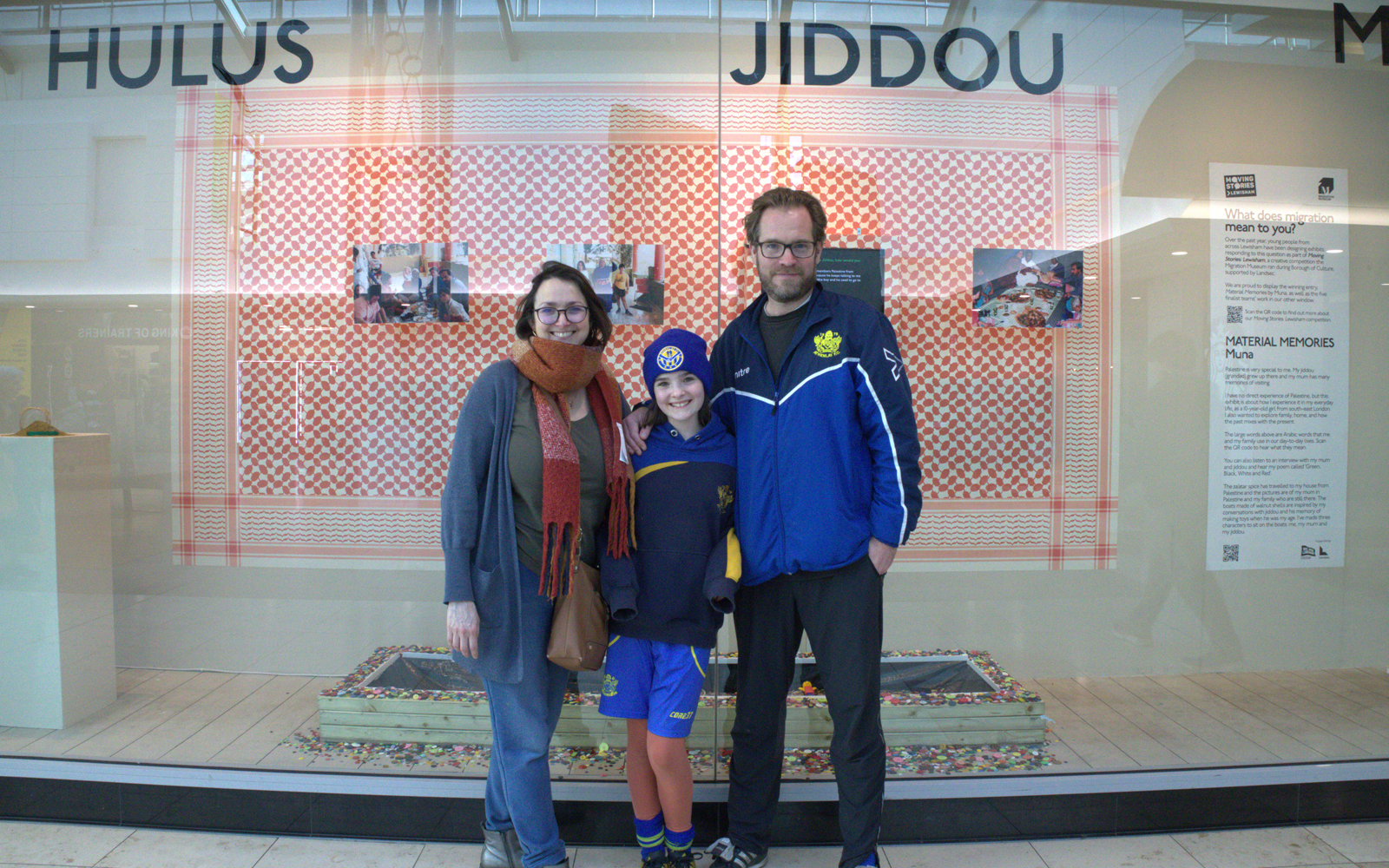
When I got home that day, I immediately set to work and started to gather different objects that were connected to my Palestinian heritage: a bar of soap made by my great grandmother from her olive trees, a pillow with tatreez (traditional Palestinian embroidery), a keffiyeh (Palestinian scarf) that has been passed from my Jiddou (grandfather) to my mum, to me.
Then I took a photo of all these things and filled out a form about why I wanted to be part of the competition and what I envisioned my mixed-media piece to look like.
To my excitement, I later found out that I had been shortlisted. I worked over the next few months to develop my piece and on the night of the finals, I presented among six other groups of young people – and I won! This meant that I got to have my piece displayed in the window of the museum.
Four years later, my dad told me about an opportunity that the museum was running for young people to apply to join a Young People’s Panel, and I almost jumped out of my seat! The idea of working again with the Migration Museum, and carrying on my relationships with the staff was too good to miss, so I applied – and I got in!
Even though being part of the youth panel is a different skillset to the Moving Stories competition – event planning instead of curation – I hope I can bring my knowledge of migration, collaborating with artists and experience of project planning to the youth panel.
What have you gained from being a part of the Moving Stories Competition and the Young People’s Panel?
To start, during the Moving Stories competition I gained a lot of support from Anan Tello who was my mentoring artist, and this was really useful as I got to work with someone who had more experience than me and I was able to gain a different perspective when creating my piece.
One thing I sometimes struggle with is when things don’t go exactly as I plan, but during the process I had to continually adapt my ideas for the piece depending on what was possible, the timescales, and the resources I had access to, meaning that my first thoughts for the project were completely different to the final piece. This helped me become more reactive and flexible in situations, but still create something that I was incredibly proud of. Also during the finals event I had to present to over 100 people, and this really helped develop my confidence for speaking in public.
So far in the Young People’s Panel, I have gained a lot of experience and understanding of event planning and the logistics involved, which is really helpful because that is a job I might want to go into in the future. I’ve also met lots of different people from all walks of life and this has helped me have a new type of appreciation for collective ideas, developing something as a group, and how everyone’s input can shape the process and outcome.
Why do you think a museum about migration is important?
The Migration Museum is the UK’s missing museum. It gives power to so many different voices by telling stories of experience – some joyous, some difficult, but all deserving of being shared. And by sharing these stories of hope, and bravery, of migrants building communities after they have left everything behind, the Migration Museum builds a community of their own, bringing a positive impact wherever they go.
But arguably most importantly, the museum is welcoming to everyone: every voice, story or opinion. Hate is fuelling in our society, and it’s so easy to just ignore people who have a different perspective to you, saying they are wrong or don’t deserve your engagement. However, that’s not going to solve any problems or change anyone’s minds. The Migration Museum doesn’t do that. It remains open-minded and encourages others to be so too – offering a unique perspective on how the history of Britain and migration go hand-in-hand and how migration is so intertwined in society that without it, we would crumble.
I bet a lot of people have walked out of the doors of the museum with a completely different perspective than they had before they entered, and that means something. The world needs change now more than ever – and the Migration Museum is creating it.
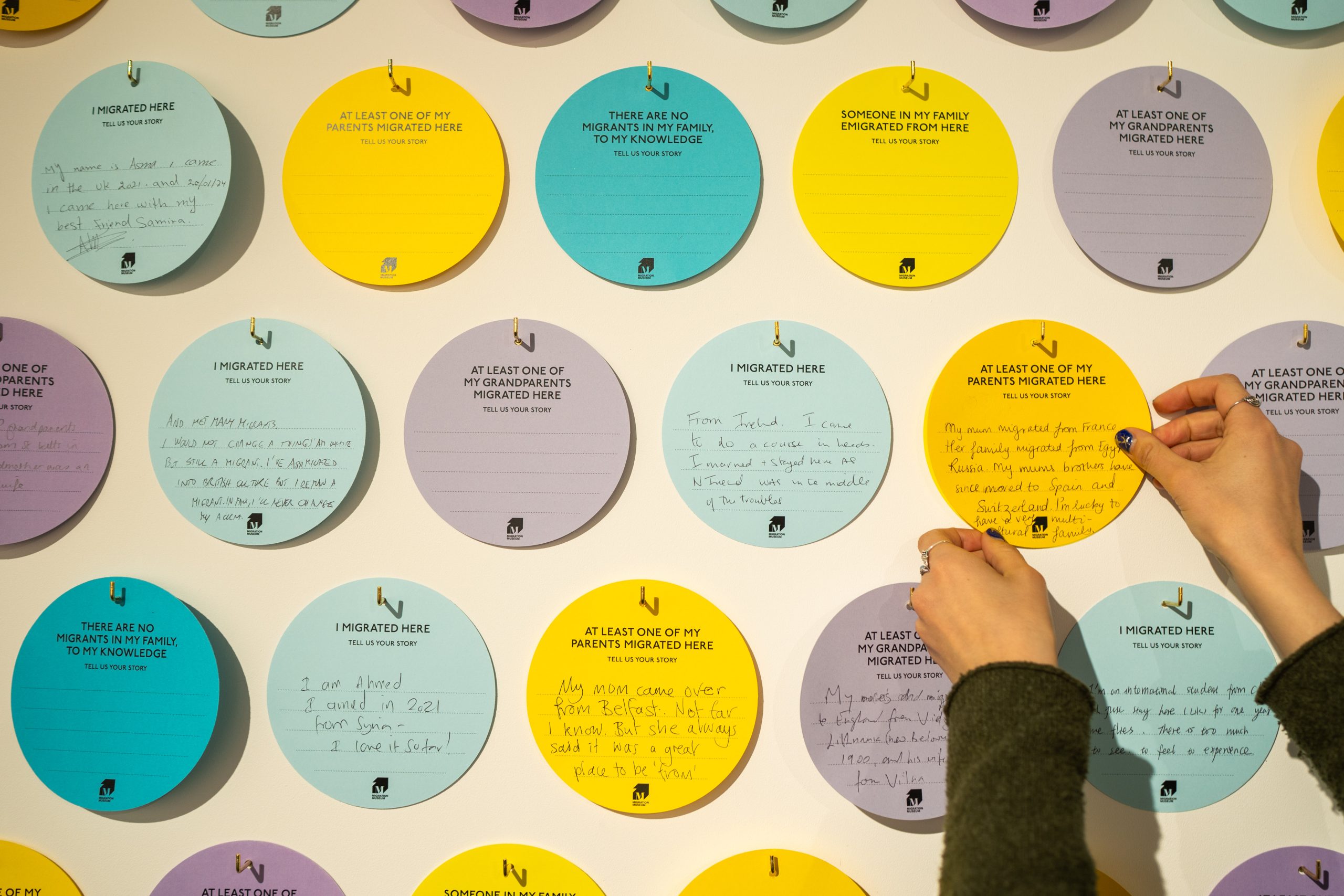
What role do you think museums play in supporting young people today?
There are different ways that museums support young people today, and a main way they do that is by creating opportunities. If the Migration Museum hadn’t created a Young People’s Panel, I wouldn’t be writing this blog right now!
Through being part of the Panel, we met other youth panels and found out about what other museums and galleries offer, for example when we went to the Whitechapel Gallery, we met a 19-year-old who shared with us her journey of working there – she started as part of a youth association, and through continuing a relationship with the gallery she now does freelance work for them. Creating opportunities such as this can give young people valuable experience and skills, and also help guide them down career paths that they might not have had access to before.
When I heard this question, I have to say I struggled to think of an answer. Because although some museums provide support, there is still a long way that they can go to achieve much more. Firstly exhibitions: museums these days cater for either families and young kids or adults, and not so much teenagers. Which means that a lot of people my age think museums are not a space for them – and this is a massive problem seeing as, in 2024, 10-19 year olds made up 10% of the UK population. Likewise, most museum events don’t cater for young people’s interests, attention spans or perspectives.
Museums shouldn’t be viewed as just a place for clever academics or wild little kids. They should be a place for everyone, a place that grows its own community by listening to all voices, thoughts and opinions and ultimately a space where everyone can explore collective stories and histories. So how can museums achieve this? Providing more of the opportunities I mentioned earlier: youth panels, clubs, trips, tours and competitions specifically for young people. Doing this will enable teenagers to have a real voice and input, not in a superficial way, but in a way that they can hold responsibility and shape the museum’s future by creating events they know people their age will be drawn to and want to attend.
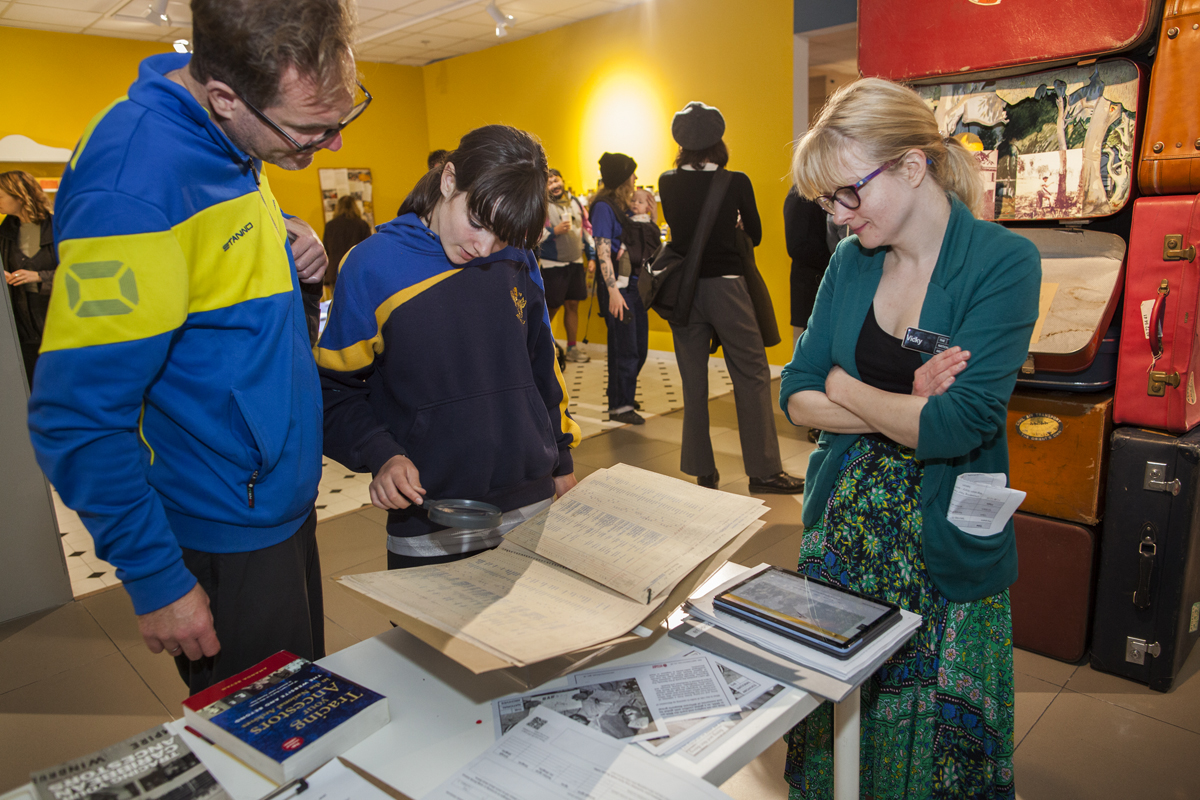
What would meaningfully involving young people in shaping the Migration Museum look like to you?
The Migration Museum is better at involving young people than any other museum I know. But even they could do more in the future. A major way the Museum contacts young people about opportunities is through schools, and while this often works and is a good tool, they should also put energy into engaging them as individuals in a way that is not related to school. For example, they could get a group of young people to be the marketing panel who could work on writing social media posts and using platforms to get the attention of their peers, as people are more likely to be drawn to posts if they can tell it has been written by someone the same age as them.
Another great thing to do would be to create more work experience opportunities with a variety of choices, and setting up a mentoring program where teenagers can pair up with an experienced staff member at the museum for a week and learn their expertise. For example, someone who is interested in arts and design could pair up with a curator to get an insight into what it’s like as a job. Finally, the museum should create a community space where young people can go – free of charge – to relax and be safe, a little nook away from the noisiness of London and our lives, to read, do homework or play board games.
Is there anything else you’d like to share with us?
Thank you for reading my long answers. I know they were long – my mum kept telling me to make them shorter – but I really wanted to pour out all of my ideas onto the page.
If you’re reading this, I hope you come to the event that our Young People’s Panel is creating – keep an eye out for full details. And see you at the Migration Museum’s new space in 2028!
*Cym Henry worked as a Learning Assistant at the Migration Museum between 2021 and 2025.
Leave a Reply