Are you a musician playing music from around the world or inspired by migration? Apply to perform at our first ever Young People’s Panel event in December.
Our Young People’s Panel are hosting an event at The Albany in Deptford, south-east London on Saturday 19 December exploring migration and connection through music, storytelling and creative workshops.
We welcome solo musicians or groups of all ages – including young people – playing any genre of music to apply to perform at the event.
Selected musicians will be invited to give a short performance and to talk briefly about your migration connection or how migration has inspired the music you play.
Read on for more details and how to apply:
About us
The Migration Museum explores how the movement of people to and from the UK across the ages has shaped who we are – as individuals, as communities, and as nations.
We stage award-winning, story-led exhibitions and dynamic events, alongside a far-reaching education programme, We have a growing digital presence and convene a knowledge-sharing Migration Network of museums and heritage organisations and professionals across the UK.
We have been based in a series of temporary venues, most recently in Lewisham, south-east London, where we welcomed over 200,000 visitors between 2020 and March 2025.
The Migration Museum now has been given the green light for a new permanent home in the City of London. Our permanent museum, opening in Spring 2028, will be Britain’s missing museum, delivering a wide programme of exhibitions, events, learning and community programmes and activities reaching 140,000 people in person annually.
As the Migration Museum prepares to open our new permanent museum, we have convened a Young People’s Panel to help ensure that young people’s voices are embedded into our new museum.
Our Young People’s Panel consists of 11 young people, aged 14-19, with connections to the boroughs of Lewisham and Tower Hamlets. The Young People’s Panel is shaping the future of the Migration Museum, including curating a new youth event and advising us on youth programming.
The event
Saturday 19th December, 3-6pm The Albany, Deptford
This event, created for and by young people, will explore migration and connection through music, storytelling and creative workshops.
The Young People’s Panel are looking for either groups or solo musicians who play music from around the world or that is inspired by migration.
Selected musicians will be invited to give a short performance (max 20 minutes) at the event, and to talk briefly about their migration connection or how migration has inspired the music you are playing.
The Young People’s Panel welcome applications of any genre of music and musicians of any age, including young people.
Budget and fee
Up to £250 for the 20-minute performance slot. Where multiple musicians perform within the 20-minute slot, the fee will be shared between the performers.
How to apply
To apply please email the following to tia@migrationmuseum.org: – A short video or recording of your music – A short statement (max 200 words) explaining your/your music’s connection to migration
Please note: you do not need to create a new video/recording for this, it can be from a previous performance/rehearsal. You can send us the link to a YouTube video, social media post, or attach the file to your email. For large files, it may be necessary to use WeTransfer or a similar service to send us the file. The deadline to apply is: 23:59 on Sunday 25th October.
Funder
Our Young People’s Panel is supported by City Bridge Foundation, the funding arm of The City of London Corporation’s charity, Bridge House Estates (1035628)
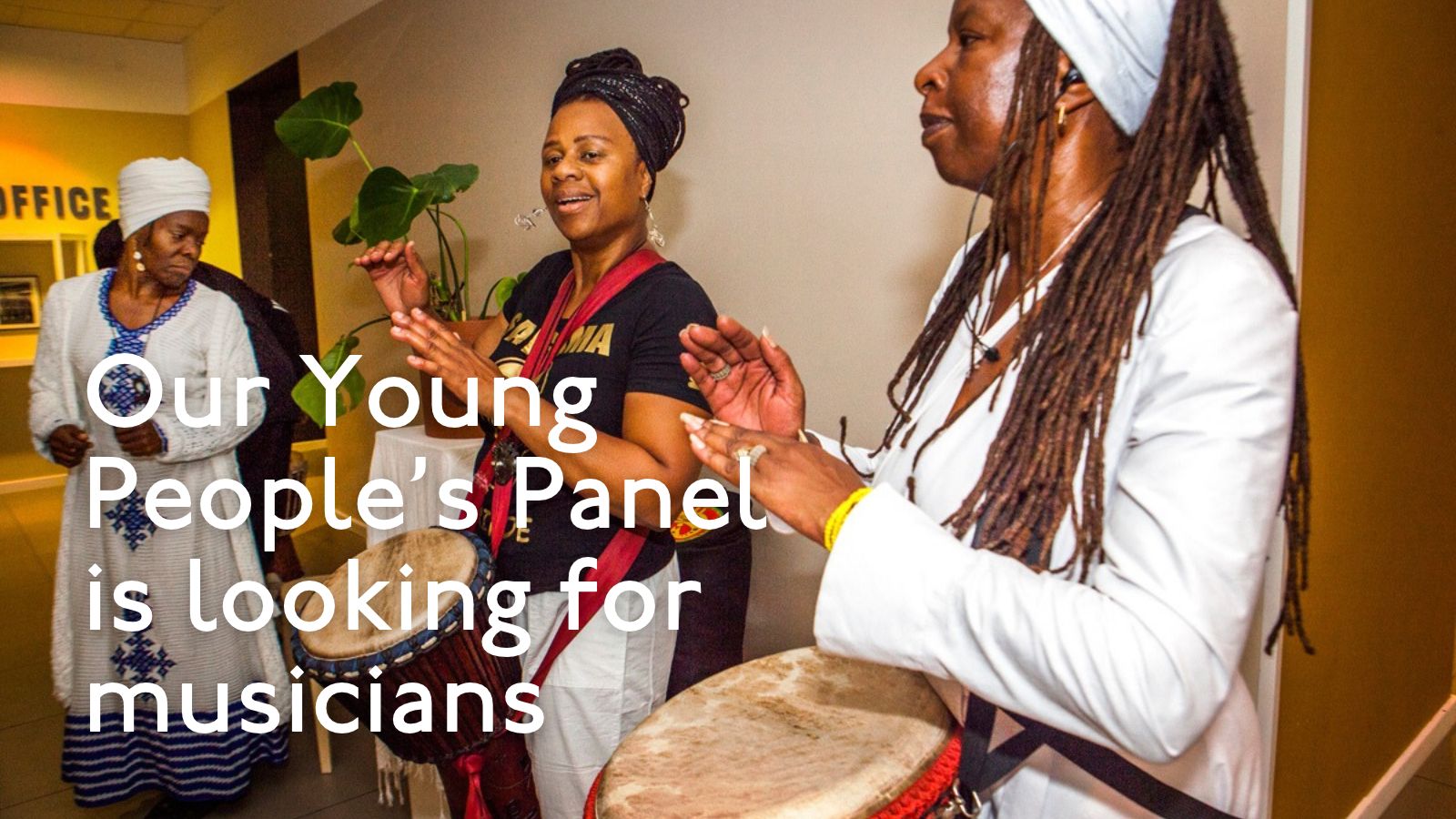
Image credit: Performers at Windrush 75: Legacies event at the Migration Museum in Lewisham in 2023. Photo: Elzbieta Piekacz
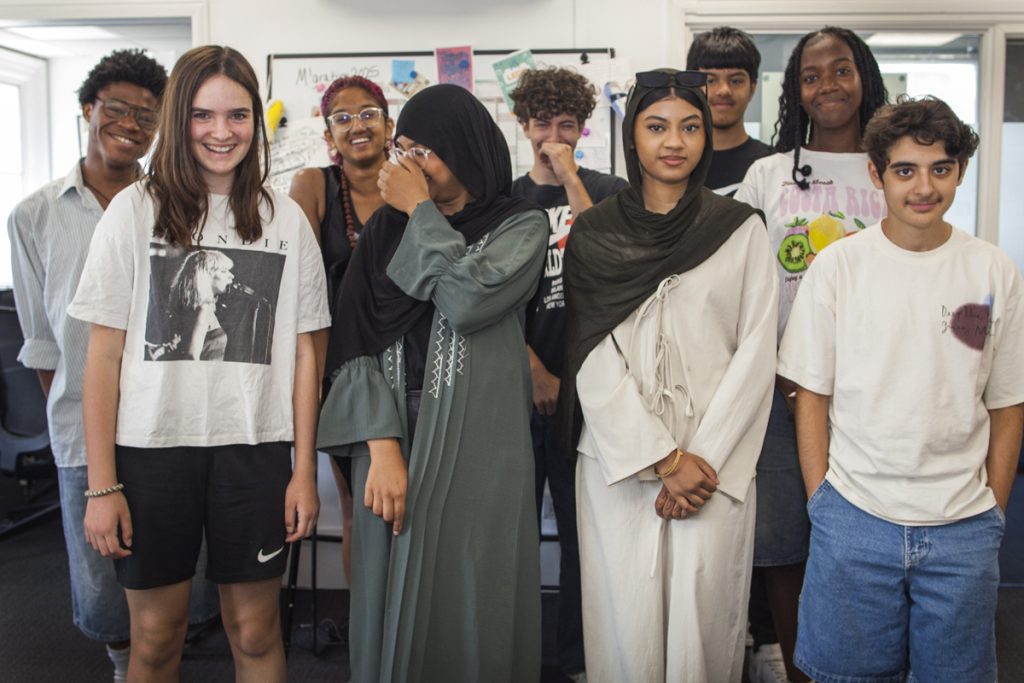
Members of the Migration Museum’s Young People’s Panel (Photo: Elzbieta Piekacz)
As the Migration Museum prepares to open our new permanent museum in the City of London, we have convened a Young People’s Panel to help ensure that young people’s voices are embedded into our new museum.
Almost 300 young people aged 14-19 with connections to our new home borough of the City of London, our neighbouring borough Tower Hamlets, or our previous home borough of Lewisham applied, from which we selected 11 young people to join the panel.
For the panellists, this is a paid opportunity to help shape the opportunities and programmes for young people in our new museum.
Phase 1 of our Young People’s Panel took place in July 2026, and our incredible panel has already been hard at work shaping the future of the Migration Museum. So far, they’ve:
✨ Drafted a manifesto for how we work with & for young people 🎪 Started curating a brand-new youth event and advised us on youth programming 💡 Challenged us to think about different ways of being a more inclusive, welcoming, and inspiring space for young people
Phase 2 is now underway, during which our Young People’s Panel will bring their vision of an event for young people to life, supported by the Migration Museum team and members of our People’s Panel, culminating in designing and delivering the event itself in late 2026. We can’t wait to see what they build!
We look forward to sharing more updates in due course.
Our Young People’s Panel is supported by City Bridge Foundation, the funding arm of The City of London Corporation’s charity, Bridge House Estates (1035628)
The Migration Museum is delighted to announce that The Wolfson Foundation has become a Founding Partner of the UK’s first permanent museum dedicated to exploring how the movement of people to and from these shores across the centuries has shaped who we are.
The Wolfson Foundation has awarded £600,000 in funding, which will be put towards the fit-out of our new permanent home in the City of London, and the development of content, including story-led permanent and temporary exhibitions, learning programmes and special events.
When it reopens at its permanent home in Spring 2028, the Migration Museum will be the UK’s first permanent museum dedicated to migration, welcoming 140,000 visitors a year to its exhibitions, events, learning and community programmes, including 20,000 learners.
The new Migration Museum will challenge perceptions of what a museum can be and do – evoking surprise and delight through relevant, resonant and unexpected experiences and collaborations, with personal stories at the heart of everything we do.
Co-production and co-creation will be at the heart of our curatorial vision, with the Migration Museum working with five partners across the UK to recruit 10 Community Curators to collect stories from across the UK that will feature in our permanent home, ensuring that we are creating a museum that is truly UK-wide in scope and a platform for migration stories from across the UK.
The Wolfson Foundation is an independent grant-making charity with a focus on research and education. Its aim is to contribute to civil society by supporting high-quality projects in science, health, heritage, humanities and the arts.
Since it was established in 1955, it has awarded over £1 billion (£2 billion in real terms) to around 14,000 projects throughout the UK.
Announcing the funding, Georgina Lewis, Development Director of the Migration Museum, said:
“It’s hugely exciting to have such a widely respected institution like The Wolfson Foundation as a founding partner. As an organisation with a fascinating migration story of their own, and deep understanding of the important role that museums like ours can play in society, we’re thrilled to be working with them.
“This support is thanks to the ambition and hard work of the entire Migration Museum team and will be transformational in enabling us to realise our vision for the UK’s missing museum, opening in 2028.”
Paul Ramsbottom, Chief Executive of The Wolfson Foundation said:
“The history of migration is rich and colourful. In its varied shapes and forms, migration affects each of us – and it is not possible to understand our country without these diverse stories. The Migration Museum tells those stories, past and present, with elegance, sensitivity and beauty. It is therefore a great delight to support the Museum’s move to the heart of the City of London: an appropriate backdrop for this important institution.”
Find out more about the Migration Museum’s plans for its permanent home and how you can get involved.
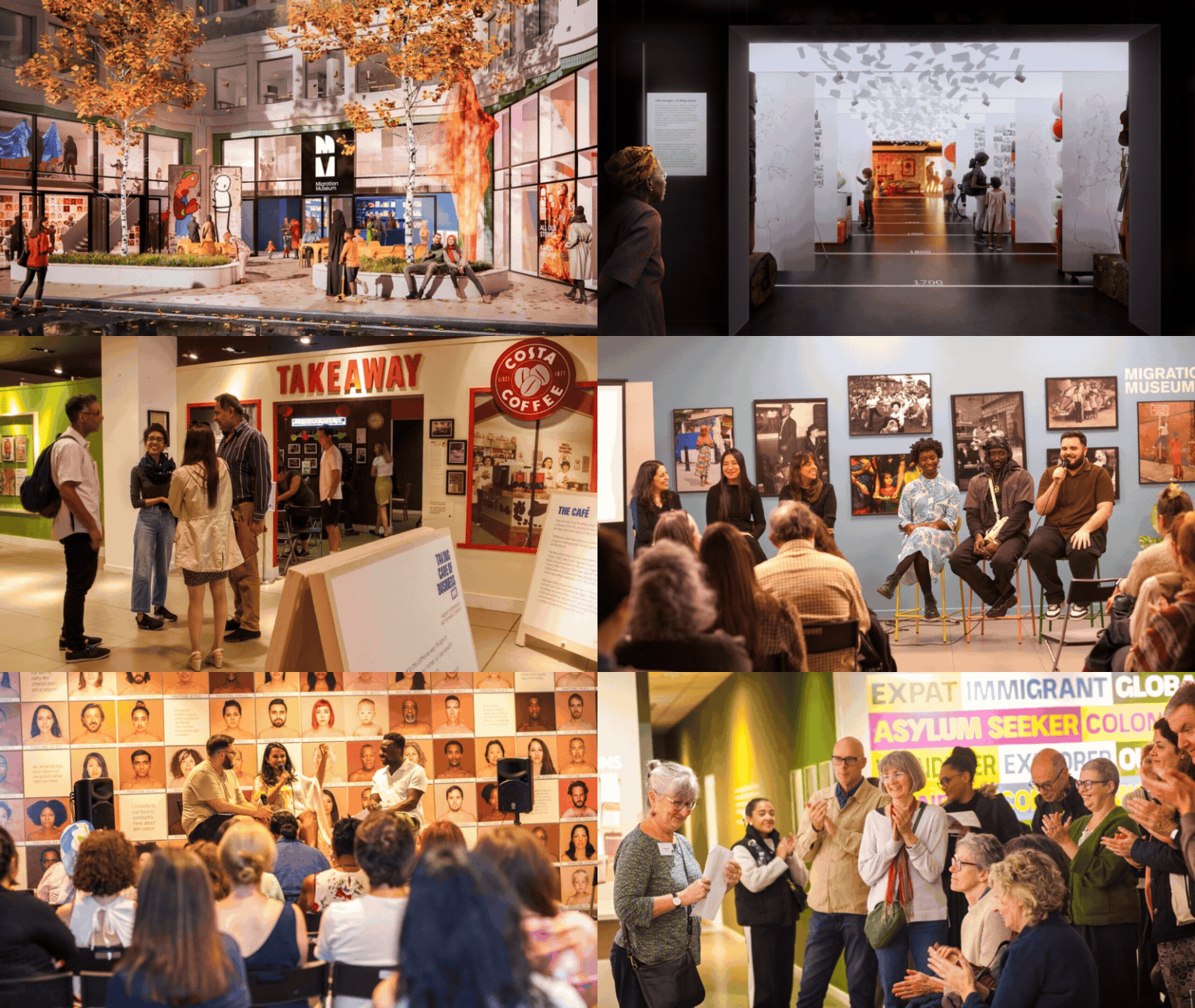
1 External visualisation of the Migration Museum’s new permanent home in the City of London, an inspiring new cultural landmark opening in 2028 exploring how migration to and from the UK has shaped who we are (Image: Unknown Works/Migration Museum)
2 The Migration Museum’s new home will provide state-of-the-art gallery spaces for core and temporary exhibitions exploring how migration has shaped our history, culture and society (Image: Unknown Works/Migration Museum)
3 Over the past decade, the Migration Museum has staged award-winning exhibitions exploring the impact of migration on so many aspects of our lives, including Taking Care of Business: Migrant Entrepreneurs and the Making of Britain (Photo: Elzbieta Piekacz/Migration Museum)
4 The new Migration Museum will be an inspiring setting for creative workshops and events bringing people together to explore our connections to migration (Photo: Elzbieta Piekacz/Migration Museum)
5 Migration Museum Community Curators in the museum’s previous temporary home in Lewisham. Co-curation and co-production is at the heart of the Migration Museum’s approach (Photo: Elzbieta Piekacz/Migration Museum)
6 A Migration Museum discussion event exploring the impact of migration on food featuring author and broadcaster Jimi Famurewa.The new Migration Museum will be an inspiring setting for talks and events (Photo: Elzibieta Piekacz/Migration Museum)
7 Guided tours and walks led by the Migration Museum team and volunteers will bring its exhibitions and programming to life (Photo: Elzbieta Piekacz/Migration Museum)
The Migration Museum’s Daria Valova-Lynch appeared on Kamilah McInnis’ show alongside Councillor Julia Hilton, Deputy Leader of Hastings Council, to talk about our UK-wide Migration Museum Community Curators programme, in partnership with 5 museums and galleries including Hastings Museum & Art Gallery. Broadcast across BBC Radio Berkshire, Kent, Oxford, Solent, Surrey and Sussex.