

From Squats to Soup Kitchens: The Care Networks of Migrant London
This post is written by Anika, one of the student researchers and guides who have developed our Migrant Women From the City to the East End walking tour as part of our placement programme.
We often talk about migration as the point of arrival: who came, when, and from where – but that is only the beginning of a much longer story. For many migrant communities in Britain, survival and success didn’t come from the system; it came from supporting each other. More often than not, it was women who made that survival possible.
Across history, migrant women have been at the centre of building networks of care: finding housing, creating support systems, and holding communities together in ways that were rarely recognised, but always essential. This is what we might think of as “radical care” collective, everyday acts that become a form of quiet resistance.
In 1970s East London, that care took on a particularly visible form in the fight for housing. Bangladeshi families, facing racial violence and systematic exclusion from council housing, began occupying abandoned buildings around Brick Lane. These occupations were not spontaneous or chaotic. They required organisation, negotiation, and constant upkeep, much of which was carried out by women.
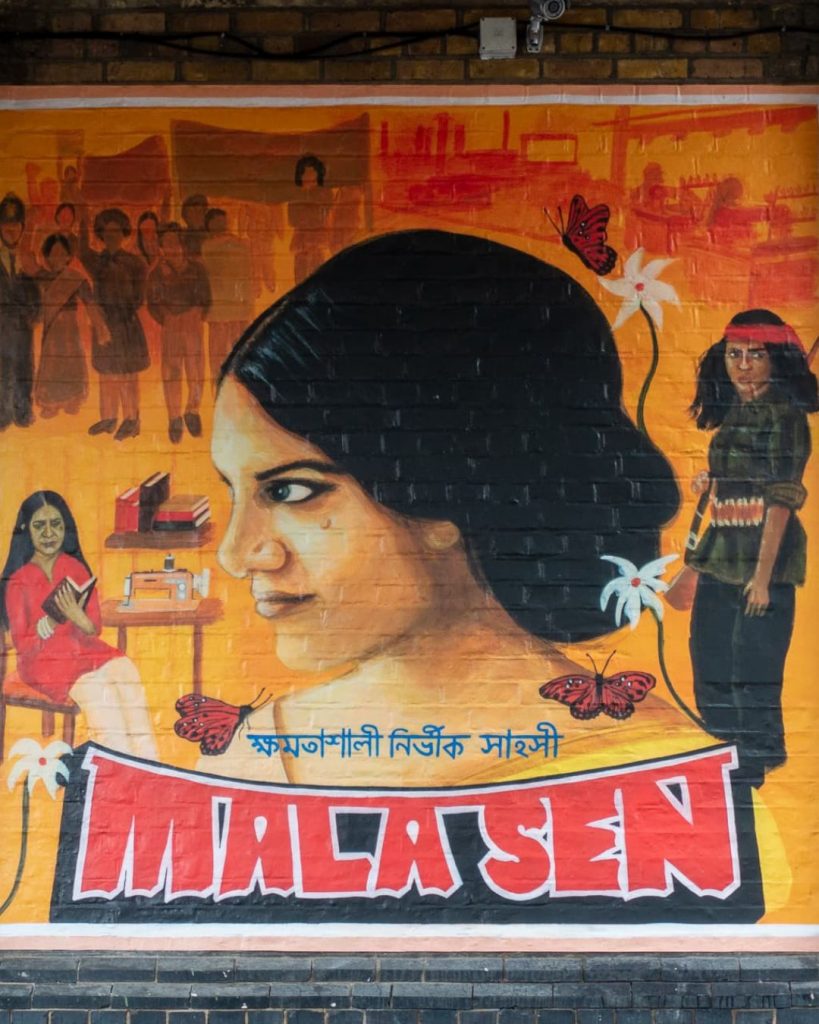
Mala Sen: Occupying Buildings and Preserving London’s History
Activists like Mala Sen helped shape the Bengali Housing Action Group, turning scattered acts of squatting into a coordinated political movement.
But beyond leadership, women were deeply involved in the daily labour that made these spaces liveable. They organised rotas, allocated rooms to families, mediated disputes, and ensured that new arrivals – often vulnerable and unfamiliar with the city – had somewhere to go. They cooked shared meals, cared for children collectively, and maintained a sense of order in buildings that had been left to decay. In many cases, this squatting movement also ended up preserving parts of London’s history; some of these buildings would likely have been demolished and replaced with office blocks if they hadn’t been occupied at the time, and today they remain part of what makes the city feel so distinctive.
This was not simply support work, existing alongside activism. It was the infrastructure of the movement itself. Without it, occupations could not be sustained.
The area of Brick Lane today, with its unique historical buildings, is one of London’s most famous tourist destinations. Yet without these women occupying the buildings, they would have been lost to developers and swallowed into the mass of office blocks.
This same pattern of labour appears in earlier histories as well.
The Ayahs’ Home: Radical Care
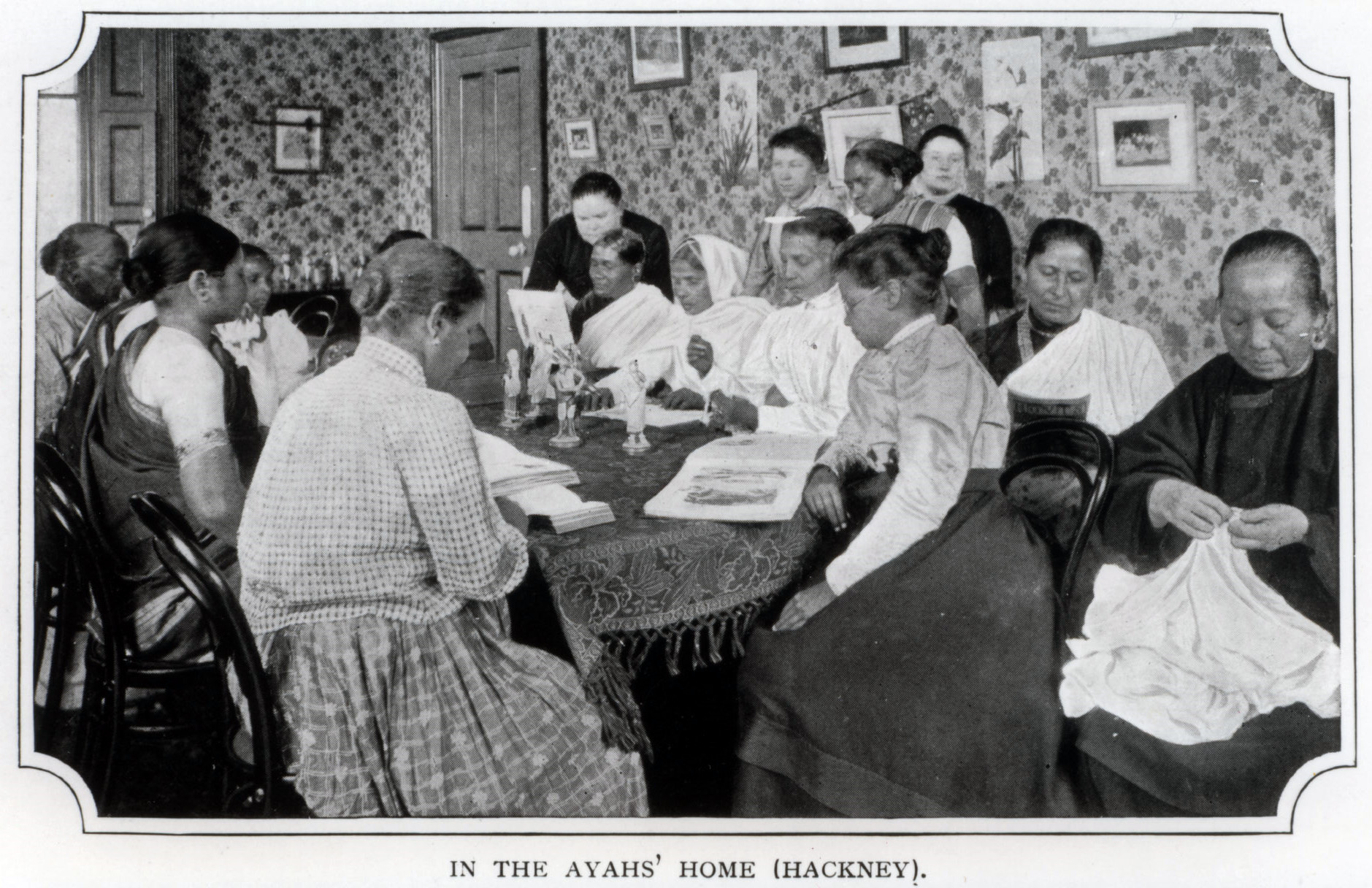
In the late nineteenth and early twentieth centuries, Indian women known as ayahs were brought to Britain as domestic workers by colonial families.
Their labour was intimate and demanding, caring for children, maintaining households, and often travelling long distances by sea under precarious conditions. Yet once in Britain, many were abandoned by employers, leaving these women without wages, legal protection, or the means to return home.
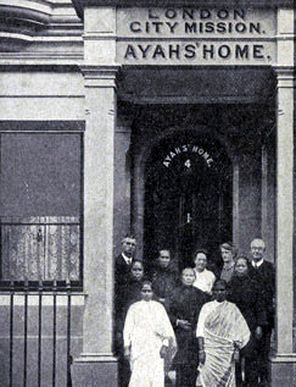
The Ayahs’ Home, initially based in Aldgate before later moving to Hackney, emerged in response to this crisis. It functioned as a lodging house, an employment exchange, and a point of contact for women navigating an unfamiliar city. But it was also sustained by networks of care among the women themselves. Within its walls, ayahs shared information about employers, warned each other of exploitative conditions, and provided emotional and practical support. In a context where their labour had been exploited and then discarded, these acts of mutual care became a way of rebuilding stability.
The Jewish Soup Kitchen: Sustaining the East End
A similar reliance on women’s labour can be seen in Jewish migrant communities in the East End during the late nineteenth century.
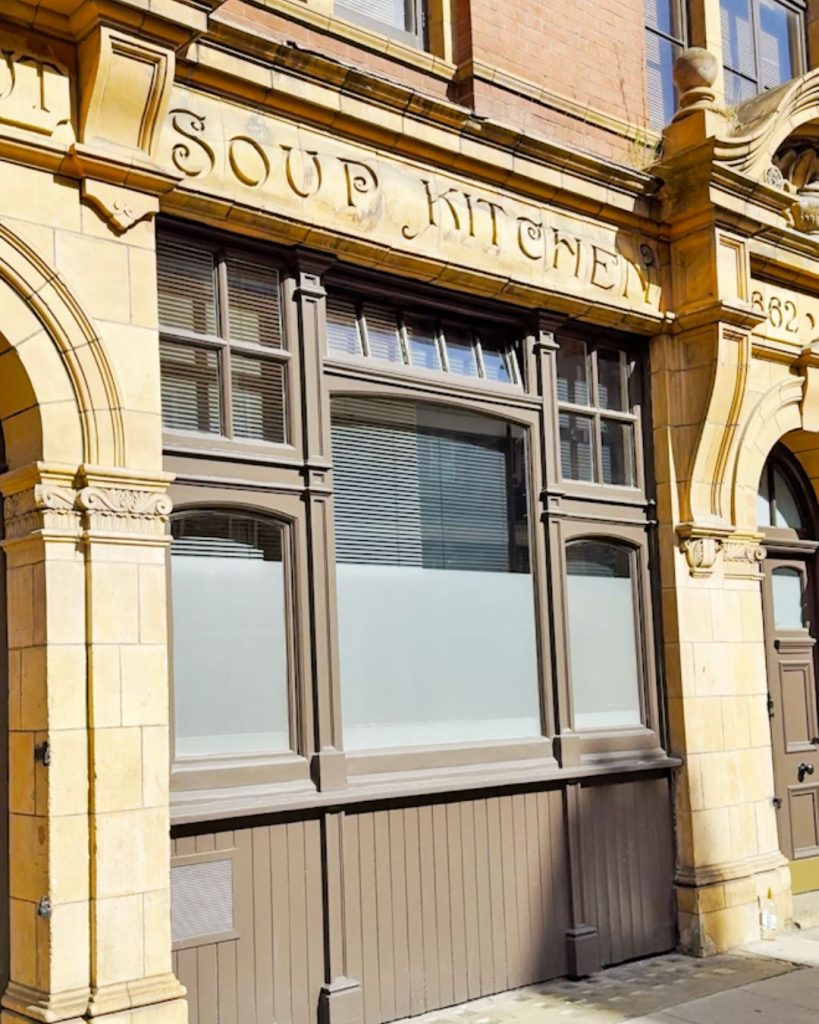
Families arriving from Eastern Europe often faced severe poverty, overcrowded housing, and limited access to formal welfare. Institutions like the Soup Kitchen for the Jewish Poor provided essential relief, but behind these organisations was a vast amount of unpaid work carried out by women.
Women prepared large quantities of food, organised distribution systems, managed donations, and ensured that those most in need were prioritised.
This work required coordination, efficiency, and an intimate knowledge of the community. It also extended beyond formal institutions, into homes and neighbourhoods, where women checked in on neighbours, shared resources, and sustained informal support networks.
The Power of Invisible Labour
Much of this labour has historically been confined to what we think of as the domestic sphere, the space of the home, the everyday, the private. Because of this, it has often been dismissed as natural, expected, or simply “women’s work,” rather than recognised as labour at all.
What these histories reveal is that the survival of migrant communities depended not just on visible acts of protest, but on forms of unpaid and often invisible labour. Cooking, organising, caregiving, maintaining households, building trust: these were not just personal responsibilities, they were collective acts that sustained entire communities.
In East London squats, in the Ayahs’ Home, and in Jewish soup kitchens, women were doing the work that made everything else possible. Yet because this labour didn’t fit traditional definitions of politics or activism, it was rarely acknowledged in the same way.
This is what makes it invisible labour. It is essential, constant, and deeply political, but overlooked precisely because it happens in the background.
Recognising this shifts how we understand civic engagement. It asks us to see the domestic not as separate from politics, but as one of its most important foundations. These acts weren’t just about getting by day to day; they were what allowed communities to form and endure in the first place. The work of care, organisation, and mutual support became the hidden structure beneath more visible forms of political life.
Feminist scholars have long argued that the boundary between the “private” and the “political” is artificial. These histories make this visible in practice. Because without this labour, there would be no movements to sustain, no communities to hold together, no histories to tell.
And perhaps most importantly, it reminds us that what is often dismissed as ordinary is, in reality, extraordinary. These women weren’t just part of London’s history. They were the ones holding it together.
Further Reading
- Jewish soup kitchen
- Swadhinata Trust: An organisation that preserves Bengali history
- Ayahs home – Hackney Museum
- Feminism for the 99%, by Cinzia Arruzza, Tithi Bhattacharya and Nancy Fraser
About the Author
Hi, I’m Anika, a Northeastern University student interested in stories, especially the ones we don’t always hear, and how they shape the way we see the world. I’ve always been drawn to the intersections of migration, identity, and everyday experiences, and I love finding ways to make history feel more human and relatable.
Enjoyed this history? Keep exploring London’s streets
If you want to uncover more of the history beneath your feet, check out Hidden in Plain Sight: Walking the City’s streets to unearth the global history of migration.
Further Image Credits:
Mural commemorating writer and human rights activist Mala Sen, Brick Lane, London, England, UK. By Angus Mcintyre 2016.
Ayahs’ Home 4 King Edward Road, Hackney. c.1900. Wikimedia Commons.
Jewish Soup Kitchen, 17-19 Brune Street, London E1 7NZ. Photo: Migration Museum
Leave a Reply