Resource bank

Planning to teach a lesson or unit on migration, immigration, emigration, multiculturalism or cultural diversity? Looking for good resources to support you? Short on time? Overwhelmed by the amount available out there and reluctant to start from scratch? We are here to help! We have searched widely and selected some of the best resources and useful websites on these themes. Use our simple search boxes to locate the right resource for you and your pupils. Please review any you’ve used and email us to recommend any others at: liberty@migrationmuseum.org.

Age Range
Subject / topic
  • Holocaust Memorial Day Drama Lesson Plan

    Produced byHolocaust Memorial Day Trust
    SubjectDrama, History
    Age rangeKS4 (ages 14–16)
    SummaryThis lesson for secondary school students aged 13–16 or a youth theatre group uses drama techniques to explore the life stories of people who survived the Holocaust and the Genocide against the Tutsi in Rwanda. It includes drama activities based on Bertolt Brecht’s techniques, which protect the performers and allow the audience to learn about… Read more
    DescriptionThis lesson for secondary school students aged 13–16 or a youth theatre group uses drama techniques to explore the life stories of people who survived the Holocaust and the Genocide against the Tutsi in Rwanda. It includes drama activities based on Bertolt Brecht’s techniques, which protect the performers and allow the audience to learn about those who survived the Holocaust and a more recent genocide.Resource
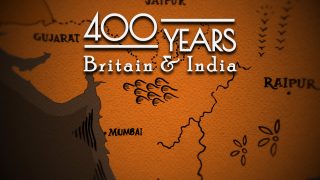
  • 400 Years: Britain and India

    Produced byInspirate, Image Nova
    SubjectHistory
    Age rangeKS3 (ages 11–14), KS4 (ages 14–16), KS5 (ages 16–18)
    SummaryA series of 10 short films which explore the shared history between Britain and India. The series covers key events that define this profound relationship, from the first voyage of the East India Company in 1601 through to Independence in 1947 and beyond.  Read more
    Description'400 Years: Britain and India' marks the 70th anniversary of India and Pakistan’s independence by introducing a globally accessible educational resource for future generations. Spanning over four centuries, Inspirate and Image Nova explore the shared history between Britain and India through a series of 10 short films. The series covers key events that define this profound relationship, from the first voyage of the East India Company in 1601 through to Independence in 1947 and beyond.Resource
  • Where is home?

    Produced byInspirate
    SubjectCitizenship, Geography, History
    Age rangeKS3 (ages 11–14), KS4 (ages 14–16), KS5 (ages 16–18)
    SummaryThis online resource explores the global journey of South Asian migration to the United Kingdom. Read more
    DescriptionWhere is Home? explores the global journey of South Asian migration to the United Kingdom. Beginning with the founding of the East India Company and the eventual abolition of slavery across the British empire, Where is Home? takes you on a journey to the present day. 2022 is a momentous year for South Asian heritage, marking the 50th anniversary of the expulsion of Ugandan Asians by dictator Idi Amin Dada, and the 75th anniversary of the partition of India. These globally significant events have shaped every aspect of modern Britain. Where is Home? explores what ‘Home’ means in Britain today, whilst considering bold issues around identity, belonging, subjecthood, nationality and citizenship.Resource
  • Ordinary objects, extraordinary stories

    Produced byHolocaust Memorial Day Trust
    SubjectHistory
    Age rangeKS4 (ages 14–16), KS5 (ages 16–18)
    SummaryThe website features four people affected by the Holocaust, their stories, objects and journeys. This resource gives an overview of the site, navigation and content, and ideas for using it as part of the History curriculum or to mark Holocaust Memorial Day with students. It also includes a PowerPoint presentation to share some of the site’s content in the classroom, with questions for discussion. Read more
    DescriptionThis resource gives an overview of the site, navigation and content, and ideas for using it as part of the History curriculum or to mark Holocaust Memorial Day with students. It also includes a PowerPoint presentation to share some of the site’s content in the classroom, with questions for discussion. Resource
  • Taking Care of Business: Migrant Entrepreneurs and the Making of Britain Digital Exhibition

    Produced byMigration Museum
    SubjectEnglish, Form time, Geography, History, PSHE
    Age rangeKS3 (ages 11–14), KS4 (ages 14–16), KS5 (ages 16–18)
    SummaryThis digital exhibition allows you to explore the stories and resources included in Taking Care of Business: Migrant Entrepreneurs and the Making of Britain. Read more
    DescriptionTaking Care of Business is an immersive exhibition at the Migration Museum shining a light on the central role that migrant entrepreneurs have played in shaping our lives – and Britain. From the food we eat to the clothes we wear, the apps on our phones to the products in our homes, our lives wouldn’t be the same without migrant entrepreneurs.  So many of the brands and businesses that are most integral to our lives – from corner shops to tech giants – are the products of migration. Yet we so rarely hear this story. Explore these untold stories in our digital exhibition. Resource
  • British Ugandan Asians at 50

    Produced byParesh Solanki, British Ugandan Asians at 50
    SubjectHistory
    Age rangeKS3 (ages 11–14), KS4 (ages 14–16), KS5 (ages 16–18)
    SummaryFilmed oral histories with former residents of resettlement camps set up by the Uganda Resettlement Board in 1972/3, to accommodate homeless Ugandan Asians expelled by Idi Amin. Also interviewed are those who volunteered at the camps to make life more comfortable for the expellees in those critical early months. Read more
    Description

    In August 1972, Ugandan dictator General Idi Amin served 90 days’ notice on around 70,000 Asians to leave Uganda. Each family was permitted to take only £55 and one suitcase per individual. 28,200 of these who held British passports were admitted to the UK. The then government set up the Uganda Resettlement Board to assist the expellees to find permanent homes, jobs and school places. Sixteen temporary resettlement camps around the country were set up and staffed in just six weeks. Charities, faith groups, campaigning organisations and private individuals in their thousands stepped forward to provide much needed support in those critical early months. This extraordinary feat of cooperation has strong contemporary relevance. Fifty years on, British Ugandan Asians have excelled in many fields from business and finance to politics, science, and the arts. British Ugandan Asians at 50 is a programme of the India Overseas Trust. We have received funding from the National Lottery Heritage Fund to record, on film, the oral histories of people who were involved in the camps as residents, volunteers or paid staff. We have focused on three of the Board’s resettlement camps: Tonfanau in Wales, Stradishall in Suffolk and Heathfield in Devon.

    Resource
  • Heart of the Nation: Migration and the Making of the NHS Digital Exhibition

    Produced byMigration Museum
    SubjectArt, Citizenship, Geography, History, PSHE, Travel
    Age rangeKS2 (ages 7–11), KS3 (ages 11–14), KS4 (ages 14–16), KS5 (ages 16–18)
    SummaryThe NHS is close to all of our hearts – now more than ever. From the very beginning, people have come to Britain from all over the world to make this grand vision for a better society a reality. The NHS would not have become the beloved institution it is today without its international workers.… Read more
    DescriptionThe NHS is close to all of our hearts – now more than ever. From the very beginning, people have come to Britain from all over the world to make this grand vision for a better society a reality. The NHS would not have become the beloved institution it is today without its international workers. But their vital role has largely been ignored.Heart of the Nation: Migration and the Making of the NHS  is a digital exhibition that puts this vital story at centre stage through oral histories and archival materials, as well as art, animations and data visualisations. Resource
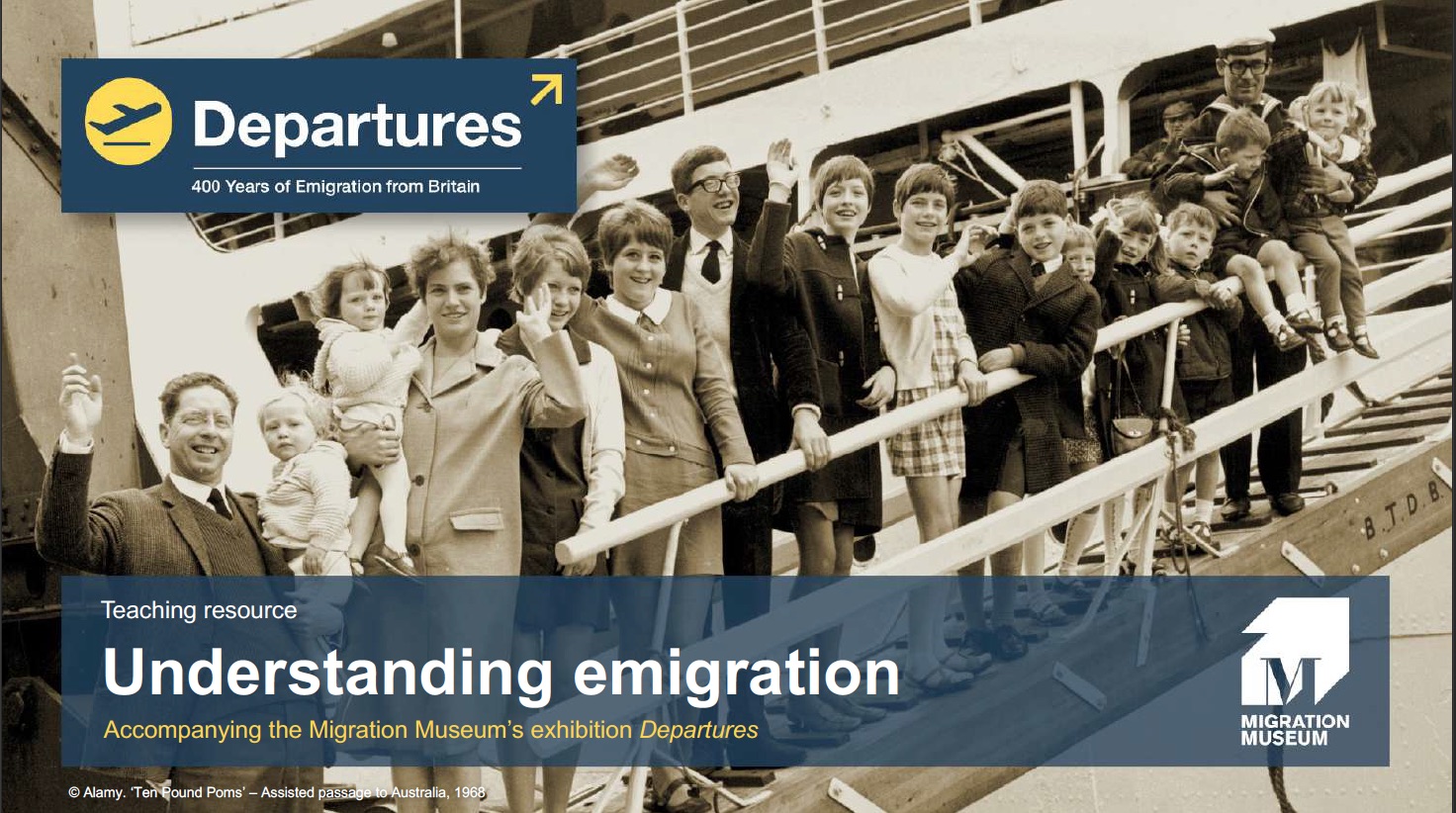
  • Departures: Understanding Emigration

    Produced byMigration Museum and David Cox
    SubjectGeography, History
    Age rangeKS4 (ages 14–16), KS5 (ages 16–18)
    SummaryThis free, in-depth resource pack shines a spotlight on 400 years of British emigration – one of the largest movements of people in modern history, yet a history that is often overlooked. This resource pack will be helpful to any student studying the impact of emigration from Britain; both on the countries people emigrated to, and on Britain itself. However, the resource pack is designed specifically for Key Stage 4 students studying GCSE History: AQA's ‘Migration, Empires and the Peoples’ unit. The pack has been designed with input from AQA teachers and the board's History subject advisor. Read more
    Description

    This free, in-depth resource pack shines a spotlight on 400 years of British emigration – one of the largest movements of people in modern history, yet a history that is often overlooked. 

    Who are the many millions who have departed these shores and why did they go? Can exploring their motivations help us better understand the motivations of people who arrive? What impact has this mass movement had on the world – and on Britain? Our resource pack features stories spanning four centuries – from Mayflower Pilgrims to Welsh emigrants to South America, Child migration schemes to the Windrush scandal.

    This resource pack will be helpful to any student studying the impact of emigration from Britain; both on the countries people emigrated to, and on Britain itself. However, the resource pack is designed specifically for Key Stage 4 students studying GCSE History: AQA's ‘Migration, Empires and the Peoples’ unit. The pack was designed by David Cox and the Migration Museum, with input from AQA teachers and the board's History subject advisor.

    The Departures: Understanding Emigration resource pack accompanies the Migration Museum’s Departures exhibition, but is designed to be used as a stand-alone resource, or in conjunction with a self-guided or facilitated learning visit to the exhibition. To find out more about organising a visit to Departures for your students, please contact our education manager Liberty Melly: liberty@migrationmuseum.org.
    Resource
  • Days To Remember

    Produced byHolocaust Memorial Day Trust
    SubjectCitizenship, Geography, History
    Age rangeKS3 (ages 11–14), KS4 (ages 14–16), KS5 (ages 16–18)
    SummaryThis collection of artefacts, historical events and personal stories offers an initial insight, for secondary school students, into the impact of historical genocides. Read more
    Description

    This set of six worksheets introduces secondary school teachers and students to six different genocides through a key date, the experiences of one person, and the story of one artefact. It can also be used in a non-school environment.

    A set of suggested activities are included to help you explore these sheets with your students.

    These worksheets are a flexible learning resource that can be used in a range of ways. They have been designed for use around Holocaust Memorial Day, which takes place on 27 January each year. You could also use them as a series throughout the year on or near to the dates featured.

    You might focus on one genocide at a time, or look at more than one worksheet in the same session. You might choose to focus on the featured people and learn about the experiences of survivors of different genocides side by side, or explore the whole collection of artefacts together as if in a museum. You could work with other departments to design a cross-curricular project.

    Produced in partnership with Remembering Srebrenica and Waging Peace, and with thanks to USHMM, the Genocide Archive of Rwanda and featured survivors.

    Resource
  • Kindertransport Lesson Plan (Primary)

    Produced byHolocaust Memorial Day Trust
    SubjectCitizenship, History
    Age rangeKS2 (ages 7–11)
    SummaryThis lesson plan uses the story of one individual, Renie Inow as an access point to the broader story of the Kindertransport (the child refugee service in 1930s Europe). Renie’s journey – This is a flexible lesson plan aimed at 9–11-year-old learners. Your students will learn about Renie Inow, who came to Britain on the… Read more
    Description

    Renie’s journey – This is a flexible lesson plan aimed at 9–11-year-old learners. Your students will learn about Renie Inow, who came to Britain on the Kindertransport at the age of 10. You will read letters her parents sent her, and learn what the Kindertransport programme was, and why it was needed.

    Students will practise reading, writing and comprehension, as well as being introduced to the history of the Holocaust in an age-appropriate way. This lesson is differentiated throughout for different abilities.

    Resource

Education funders