Please note that the application deadline for this position has now passed. Thank you to everyone who expressed interest in this role – we are currently reviewing all submitted applications.
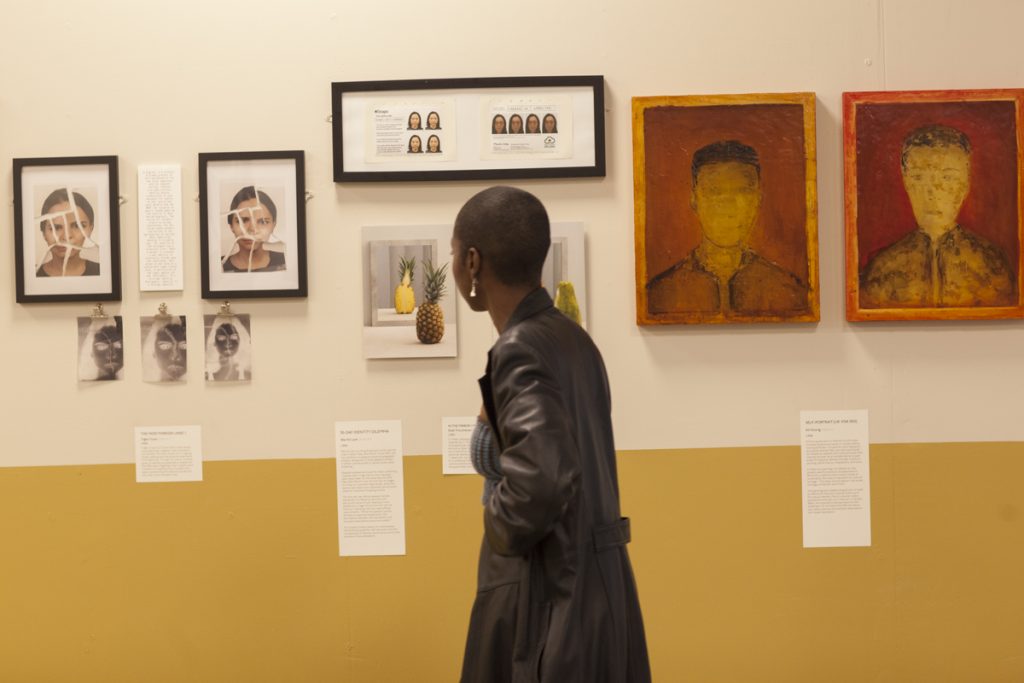
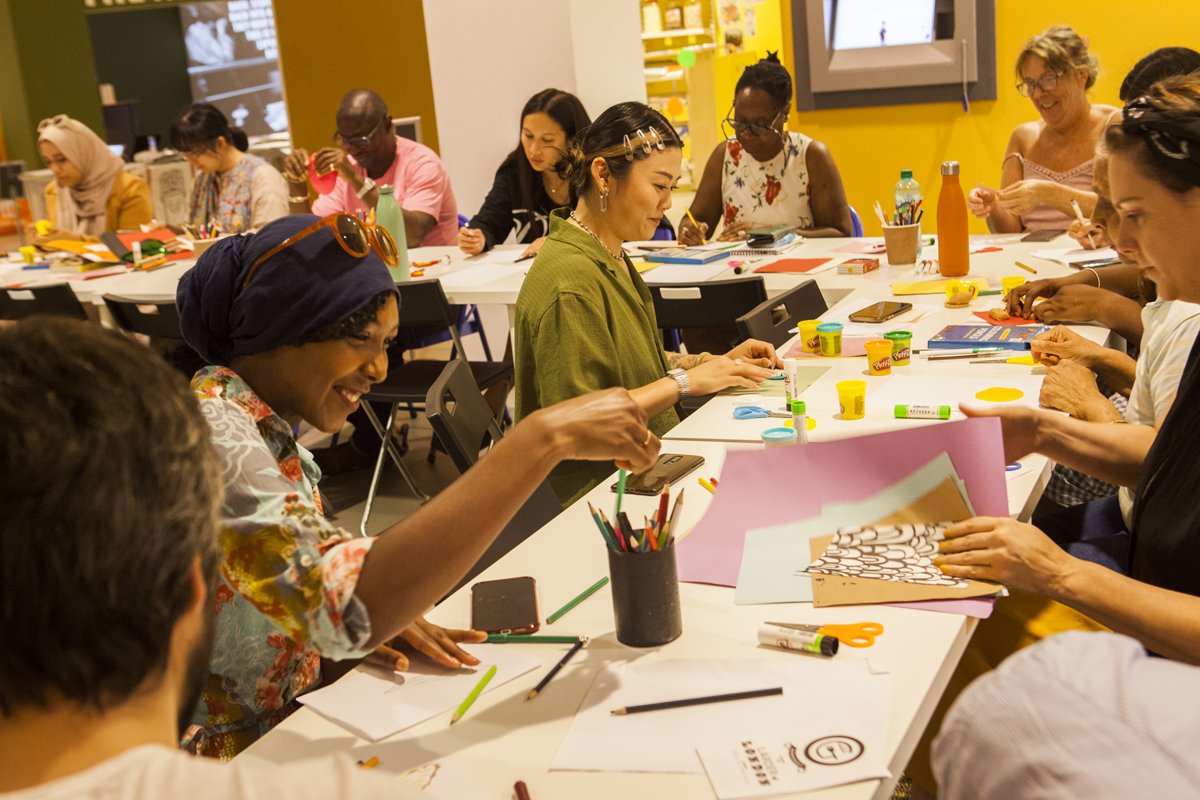
We are launching the Migration Museum Community Curators Programme – a UK-wide initiative bringing diverse voices, lived experiences, and perspectives into the creation of the UK’s Missing Museum.
This programme will work with partners across the UK to recruit 10 Community Curators, who will co-curate a series of displays and creative outputs exploring migration stories in their local areas. These displays will be shown at partner venues in Spring 2027 and will help shape the Migration Museum’s permanent home in London, opening in 2028.
Who we’re working with
We are partnering with cultural organisations across the UK, including:
The Food Museum (England)
Glasgow Life Museums (Scotland)
Baltic Centre for Contemporary Arts (England)
Museum of Free Derry (North of Ireland)
Hastings Museum & Art Gallery (England)
Each partner organisation will host two Community Curators.
Read on to view the recruitment packs and find out how to apply to become a Community Curator in each location.
Please note that we are only seeking Community Curators that are local to one of the five partner venues.
Who we’re looking for
We are looking for passionate people who believe that a more inclusive future is possible and are eager to work with local communities to highlight migration stories and bring diverse voices to life.
You don’t need previous curatorial and/or museum experience. We’re looking for people who are:
Community-minded
Passionate about representation, inclusion, and migration stories
Interested in shaping cultural narratives in their local area
From a wide range of backgrounds, ages, and lived experiences
Can plan strategically and respond quickly to opportunities and challenges
Connected to their local region through living, working, studying or organising
We are particularly interested in people who have strong connections to their local communities and are eager to tell stories to help change the narrative around migration.
If you are community-minded, interested in making a difference and in shaping an exciting new national museum, we invite you to join us.
Key Responsibilities
Participating in training sessions with creative professionals to enhance curatorial skill
Collaborating with one of the partner organisations to shape and implement the vision for the exhibition on a set theme and migration in the given region, including commissioning artwork or undertaking research
Working with the museum team to review artwork, collection objects, or texts to be on display in the exhibition
Fostering connections with diverse communities to ensure inclusive curation
Planning and delivering an exhibition launch, as well as other events that may take place throughout the time of the exhibit at the partner organisation.
Payment
Location – UK-wide (2 community curators per partner institution)
Contract type – Freelance contract for 9 months (flexible)
Salary – £20ph, approx 4 hours per week (via invoice and bank transfer or high street voucher)*.
*People seeking asylum are invited to apply. We welcome discussions on how reimbursement can be structured to meet all regulatory requirements.
Key Dates and More Information
This project will run across nine months – from September 2026 to May 2027.
Community Curators will work with the Migration Museum and one of the host organisations on a freelance basis, committing to four hours of engagement per week (paid at £20ph):
1hr per week with the Migration Museum
1hr per week with the host organisation
2hrs per week flexible (independent work or research, visits to other museums/galleries etc)
The programme will involve a curatorial skills training scheme, run by the Migration Museum and the host organisation. This course will introduce Community Curators to the basic principles of curatorial work, community engagement, as well as the practical skills of how to conduct oral histories, work with collections objects, commission artist works, write exhibition texts and install/display work in museum settings.
View the Recruitment Packs and Apply
Each partner institution will host two Community Curators. We have created separate recruitment packs and application forms for each partner institution, so please view the recruitment pack and apply to be a Community Curator hosted at the partner institution in your area via the links below:
This programme is supported using public funding by the National Lottery through Arts Council England. Thanks to National Lottery players. The programme is also generously supported by funding from University College London’s Institute of Education.
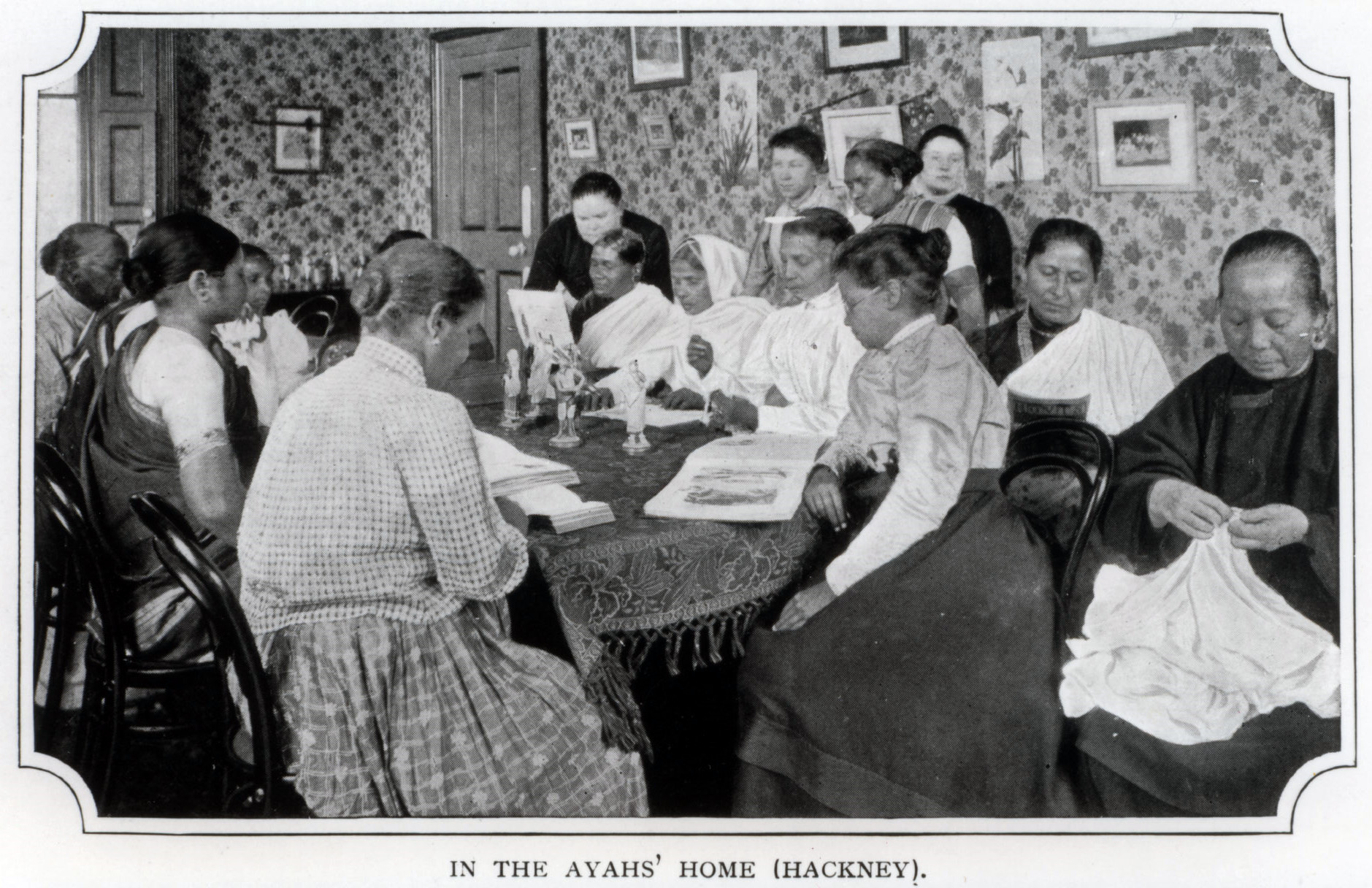
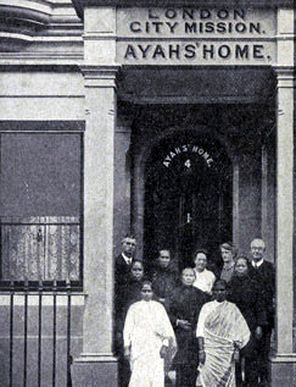
‘In the Ayahs’ Home (Hackney)’ from George R. Sims’s Living London (1901). Image in the Public Domain.
This post is written by Anika, one of the student researchers and guides who have developed our Migrant Women From the City to the East End walking tour as part of our placement programme.
We often talk about migration as the point of arrival: who came, when, and from where – but that is only the beginning of a much longer story. For many migrant communities in Britain, survival and success didn’t come from the system; it came from supporting each other. More often than not, it was women who made that survival possible.
Across history, migrant women have been at the centre of building networks of care: finding housing, creating support systems, and holding communities together in ways that were rarely recognised, but always essential. This is what we might think of as “radical care” collective, everyday acts that become a form of quiet resistance.
In 1970s East London, that care took on a particularly visible form in the fight for housing. Bangladeshi families, facing racial violence and systematic exclusion from council housing, began occupying abandoned buildings around Brick Lane. These occupations were not spontaneous or chaotic. They required organisation, negotiation, and constant upkeep, much of which was carried out by women.
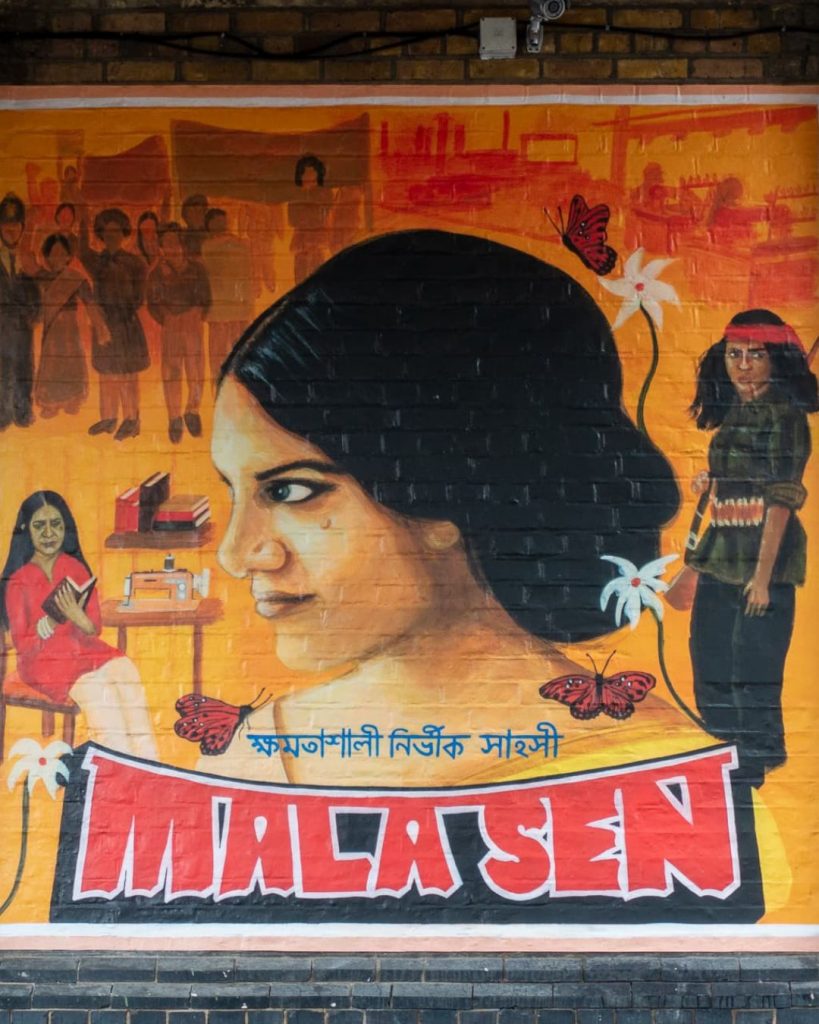
Mala Sen: Occupying Buildings and Preserving London’s History
Activists like Mala Sen helped shape the Bengali Housing Action Group, turning scattered acts of squatting into a coordinated political movement.
But beyond leadership, women were deeply involved in the daily labour that made these spaces liveable. They organised rotas, allocated rooms to families, mediated disputes, and ensured that new arrivals – often vulnerable and unfamiliar with the city – had somewhere to go. They cooked shared meals, cared for children collectively, and maintained a sense of order in buildings that had been left to decay. In many cases, this squatting movement also ended up preserving parts of London’s history; some of these buildings would likely have been demolished and replaced with office blocks if they hadn’t been occupied at the time, and today they remain part of what makes the city feel so distinctive.
This was not simply support work, existing alongside activism. It was the infrastructure of the movement itself. Without it, occupations could not be sustained.
The area of Brick Lane today, with its unique historical buildings, is one of London’s most famous tourist destinations. Yet without these women occupying the buildings, they would have been lost to developers and swallowed into the mass of office blocks.
This same pattern of labour appears in earlier histories as well.
The Ayahs’ Home: Radical Care
In the late nineteenth and early twentieth centuries, Indian women known as ayahs were brought to Britain as domestic workers by colonial families.
Their labour was intimate and demanding, caring for children, maintaining households, and often travelling long distances by sea under precarious conditions. Yet once in Britain, many were abandoned by employers, leaving these women without wages, legal protection, or the means to return home.
The Ayahs’ Home, initially based in Aldgate before later moving to Hackney, emerged in response to this crisis. It functioned as a lodging house, an employment exchange, and a point of contact for women navigating an unfamiliar city. But it was also sustained by networks of care among the women themselves. Within its walls, ayahs shared information about employers, warned each other of exploitative conditions, and provided emotional and practical support. In a context where their labour had been exploited and then discarded, these acts of mutual care became a way of rebuilding stability.
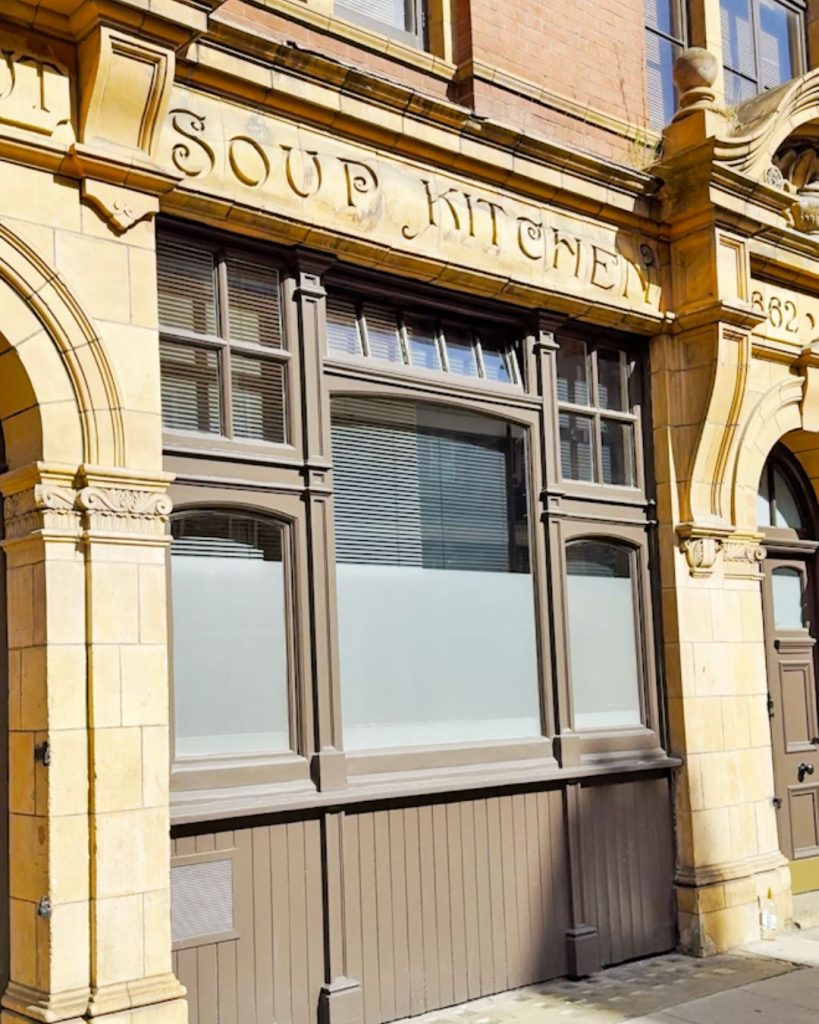
The Jewish Soup Kitchen: Sustaining the East End
A similar reliance on women’s labour can be seen in Jewish migrant communities in the East End during the late nineteenth century.
Families arriving from Eastern Europe often faced severe poverty, overcrowded housing, and limited access to formal welfare. Institutions like the Soup Kitchen for the Jewish Poor provided essential relief, but behind these organisations was a vast amount of unpaid work carried out by women.
Women prepared large quantities of food, organised distribution systems, managed donations, and ensured that those most in need were prioritised.
This work required coordination, efficiency, and an intimate knowledge of the community. It also extended beyond formal institutions, into homes and neighbourhoods, where women checked in on neighbours, shared resources, and sustained informal support networks.
The Power of Invisible Labour
Much of this labour has historically been confined to what we think of as the domestic sphere, the space of the home, the everyday, the private. Because of this, it has often been dismissed as natural, expected, or simply “women’s work,” rather than recognised as labour at all.
What these histories reveal is that the survival of migrant communities depended not just on visible acts of protest, but on forms of unpaid and often invisible labour. Cooking, organising, caregiving, maintaining households, building trust: these were not just personal responsibilities, they were collective acts that sustained entire communities.
In East London squats, in the Ayahs’ Home, and in Jewish soup kitchens, women were doing the work that made everything else possible. Yet because this labour didn’t fit traditional definitions of politics or activism, it was rarely acknowledged in the same way.
This is what makes it invisible labour. It is essential, constant, and deeply political, but overlooked precisely because it happens in the background.
Recognising this shifts how we understand civic engagement. It asks us to see the domestic not as separate from politics, but as one of its most important foundations. These acts weren’t just about getting by day to day; they were what allowed communities to form and endure in the first place. The work of care, organisation, and mutual support became the hidden structure beneath more visible forms of political life.
Feminist scholars have long argued that the boundary between the “private” and the “political” is artificial. These histories make this visible in practice. Because without this labour, there would be no movements to sustain, no communities to hold together, no histories to tell.
And perhaps most importantly, it reminds us that what is often dismissed as ordinary is, in reality, extraordinary. These women weren’t just part of London’s history. They were the ones holding it together.
Feminism for the 99%, by Cinzia Arruzza, Tithi Bhattacharya and Nancy Fraser
About the Author
Hi, I’m Anika, a Northeastern University student interested in stories, especially the ones we don’t always hear, and how they shape the way we see the world. I’ve always been drawn to the intersections of migration, identity, and everyday experiences, and I love finding ways to make history feel more human and relatable.
Enjoyed this history? Keep exploring London’s streets
Further Image Credits: Mural commemorating writer and human rights activist Mala Sen, Brick Lane, London, England, UK. By Angus Mcintyre 2016. Ayahs’ Home 4 King Edward Road, Hackney. c.1900. Wikimedia Commons. Jewish Soup Kitchen, 17-19 Brune Street, London E1 7NZ. Photo: Migration Museum
This post is written by Tawana, one of the student researchers and guides who have developed our Migrant Women From the City to the East End walking tour as part of our placement programme.
If you walk through the area of Spitalfields and Aldgate today, it’s not necessarily easy to get a sense of the history of this part of London, or how that history is linked to migration. Spital Yard is a narrow alleyway between office buildings, yet its past gives us great insight into the story and lives of migrant women, women who had a significant impact on the City and East End of London. Today 9 Aldgate is home to a branch of Nationwide bank; in the Georgian period, it was home to a bookshop that published the first book written by a Black woman in Britain. Much power can be held in ‘space’. How a ‘space’ is seen or how we view physical landscapes changes the way we interact with the world around us.
I had the pleasure of researching and putting together the Migration Museum’s Migrant Women from the City to the East End walking tour and truly saw the power of physical landscapes in understanding the history of migration in Britain. The main challenge when creating the tour was that many of the places discussed during it, such as 9 Aldgate, have been demolished or replaced. So, when creating the tour, it was important to ensure that those on the tour are able to leave with an understanding of how these specific stories have impacted the landscape we live in today.
Phillis Wheatley: The Mother of Black Literature
Phillis Wheatley (known as the Mother of Black Literature) is a great example of how the streets and buildings of London can reveal to us the story of the British Empire and how it was something that wasn’t confined to the places colonised; but fundamentally shaped Britain itself too.
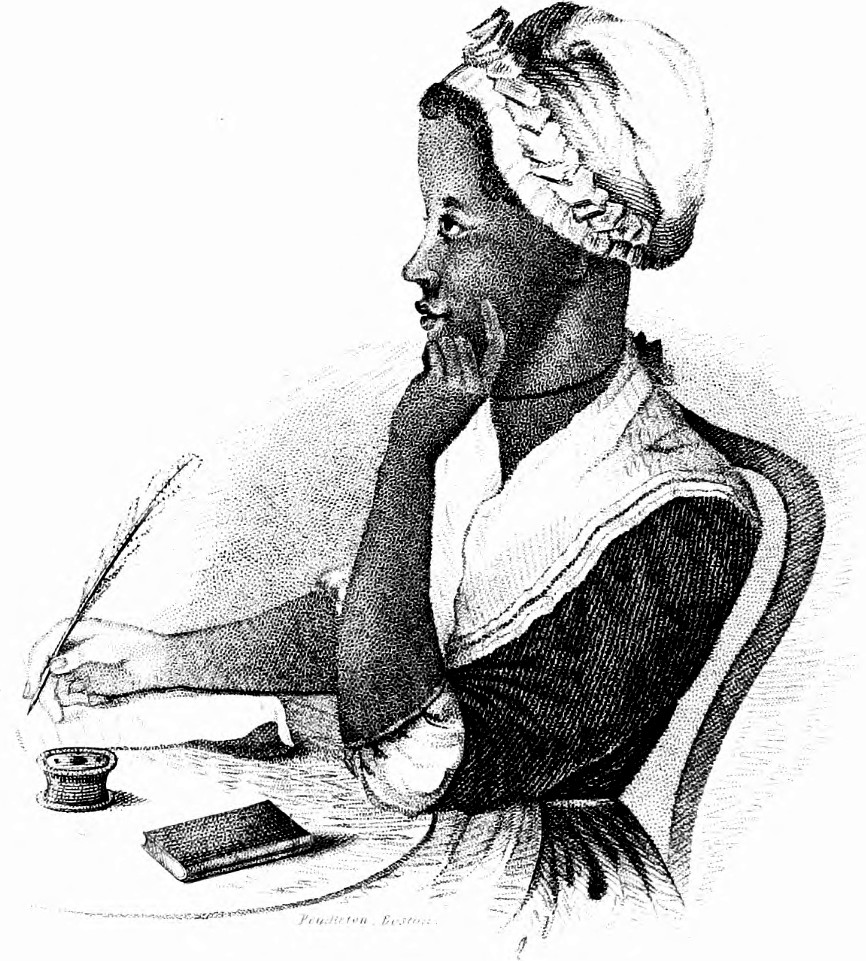
Wheatley was born in West Africa, most likely modern-day Gambia or Ghana. At the age of eight, she was enslaved, transported to America, and sold to Susanna and John Wheatley in Boston. Her name would be given to her while on the ship and she would take the last name of her enslavers. Unusually, Wheatley was taught alongside the Wheatley’s children. They recognised her talent and encouraged her to write, and by 14 she was already published.
It is important to remember that for much of Wheatley’s life America was still a British colony. This is most likely a big factor as to why she decided to travel to London and publish her book of poems at Bell’s Bookshop, 9 Aldgate, in 1773, three years before US independence. She became the first published Black woman in Britain. Wheatley did not stay in London for long. She travelled around the country and was recognised internationally for her works.
Understanding the significance of the East End in her story changes how we think of the London landscape. Not only does it show how connected its colonies were to Britain, it highlights how the Black migration story is not a post- World War Two phenomenon; but is something that begins well before. There were actually an estimated 10,000-20,000 Black people living in London during the Georgian period.
Mapping Black London, a digital project led by Northeastern University, has begun to unearth the significance of Black people in London’s long history. Through the piecing together of Parish records, court documents etc., the project has found evidence of Black people living in London since the Roman period. This kind of public-facing work challenges the perception of Britain being a mono-racial country until the 20th century.
Dona Luisa: Faith and Refuge in Spital Yard
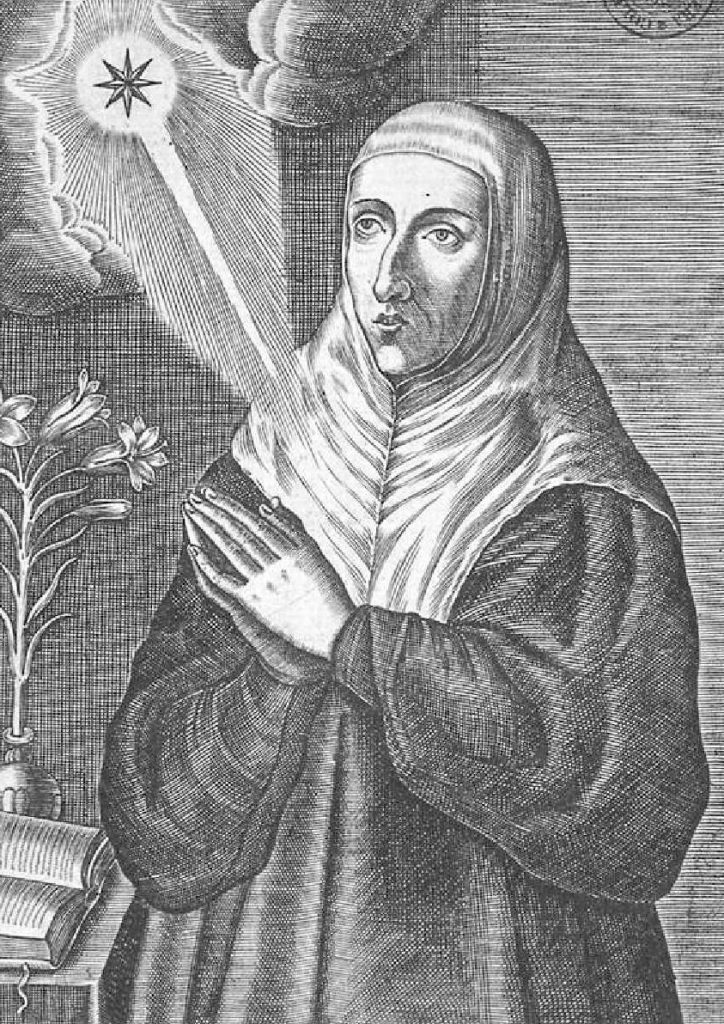
Dona Luisa de Caravajal Mendoza is another woman whose story reveals the complex history of migration in Britain . After the English Reformation in the 16th century, the Priory of St Mary Spital was destroyed and life for Catholics was not easy. Many chose to live outside the city walls in the houses and gardens among the remains of the old priory. This included Father Henry Garnet, a Jesuit priest who was eventually beheaded for possibly having prior knowledge of the 1605 Gunpowder Plot. He arranged for the arrival of Doña Luisa de Carvajal y Mendoza, a Spanish Catholic activist.
Dona Luisa was born into a rich family with royal connections. But Luisa rejected wealth and power. Instead, she dedicated herself to religion and the needs of women, especially in the poorest areas. She migrated to London from Spain in 1605, with a priest disguised as her servant, to support persecuted Catholics and convert people – especially women – to the religion.
In 1611, she rented a house on Spital Yard, where her next-door neighbour was the Venetian ambassador. She set up an illegal religious community of five women she called the ‘Society of the Sovereign Virgin’. They grew their own food and the house had tight security features, including double doors, grilles and a hidden chapel.
In 1613, her house was raided by over sixty soldiers on the orders of King James I and the Archbishop of Canterbury. They climbed the walls with ladders and broke down the doors. Two of her women died and Doña Luisa was arrested and imprisoned. Dona Luisa was released on the condition that she left England, but she refused and was imprisoned again.
Dona Luisa and her time in Spital Yard unveil an aspect of Britain’s turbulent religious history that tends to be forgotten. Not only did Dona Luisa, a Spanish migrant woman, live in East London, she collaborated with other Catholics, many of whom were also migrants, to keep her faith alive on the streets of London during a time when doing so was a matter of life and death.
Rethinking the Modern City
The brick house which Dona Luisa lived in is now swallowed up by the glass structures you see in the area today. But knowing her part in history invites us to rethink our perception of the City of London and the East End. Every stone, brick and building reveals aspects of the past; and more often than not, this past involves migrants – migrant women.
It is important that when exploring the physical landscape of the East End, we remember the importance of migrant women’s stories. These stories highlight the significance of migration in shaping British history – and the streets we walk today.
Hi, I’m Tawana. As a second-generation migrant myself, I have always been aware of how much Britain and its story is shaped by migration. My academic career goal is to assist in changing the notion of migration being something that needs to be stopped, and rather, having a more holistic understanding of migration as something that has always been a part of the British story.
Enjoyed this history? Keep exploring London’s streets
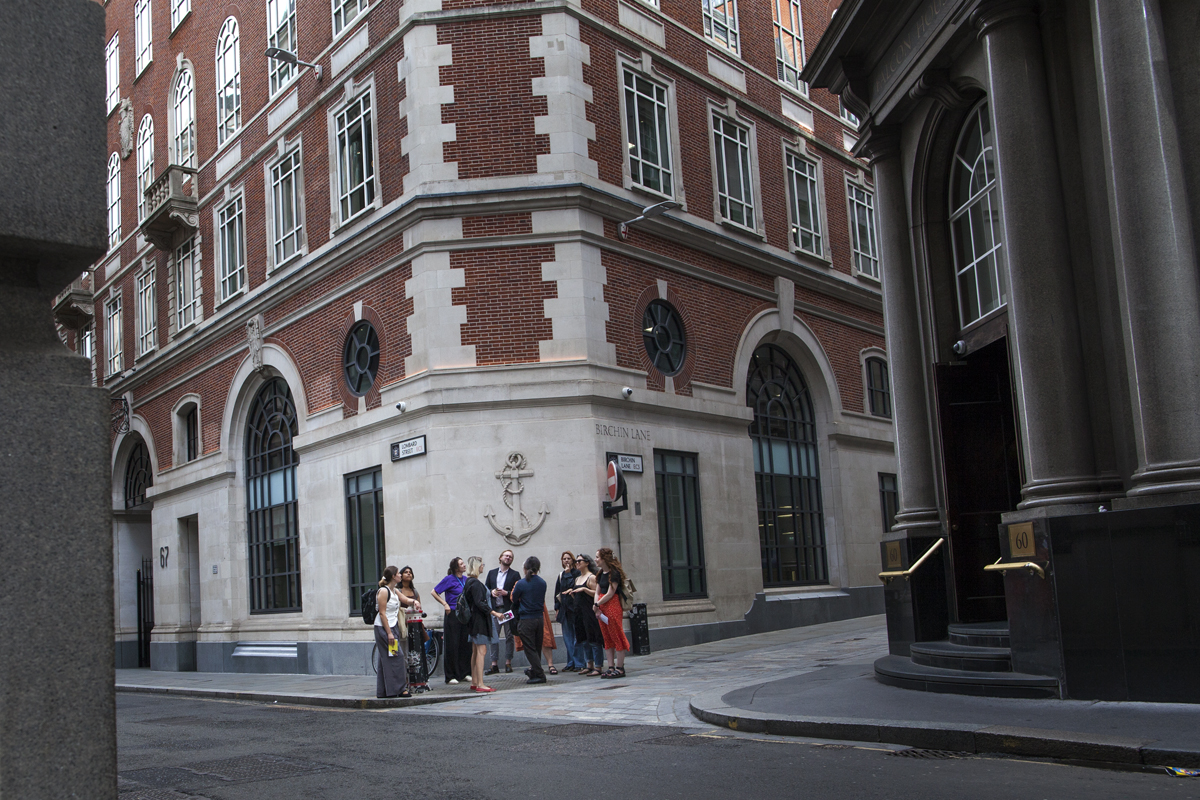
Image credits: A group in the City of London during a Migration Museum Walking Tour. Photography: Elzbieta Piekacz A portrait of Luisa Carvajal y Mendoza printed by Juan de Courbes. Portrait of Phillis Wheatley Frontpiece of Poems on Various Subjects, Religious and Moral License Public Domain.
A huge congratulations to our Front of House team for being shortlisted for the Best Visitor Experience at the Cultural Enterprises Awards.
This recognition celebrates the dedication and care of our staff and volunteers, whose warmth and expertise make every visitor experience special. From guiding visitors to meaningful exhibits that resonate with their personal stories and highlighting products from our Migrant Makers Market, to initiatives brought to life with local Community Curators, their work has created a space that is welcoming, inclusive, and guided by those it serves.
We’re grateful to everyone who has visited, shared their stories, and supported the museum — your curiosity and enthusiasm have always inspired us and made our work so rewarding. While we are currently not open to the public, we can’t wait to welcome you to our permanent home in the City of London in 2028. Get the latest updates on our journey by signing up for our newsletter here.