This post is written by Tawana, one of the student researchers and guides who have developed our Migrant Women From the City to the East End walking tour as part of our placement programme.
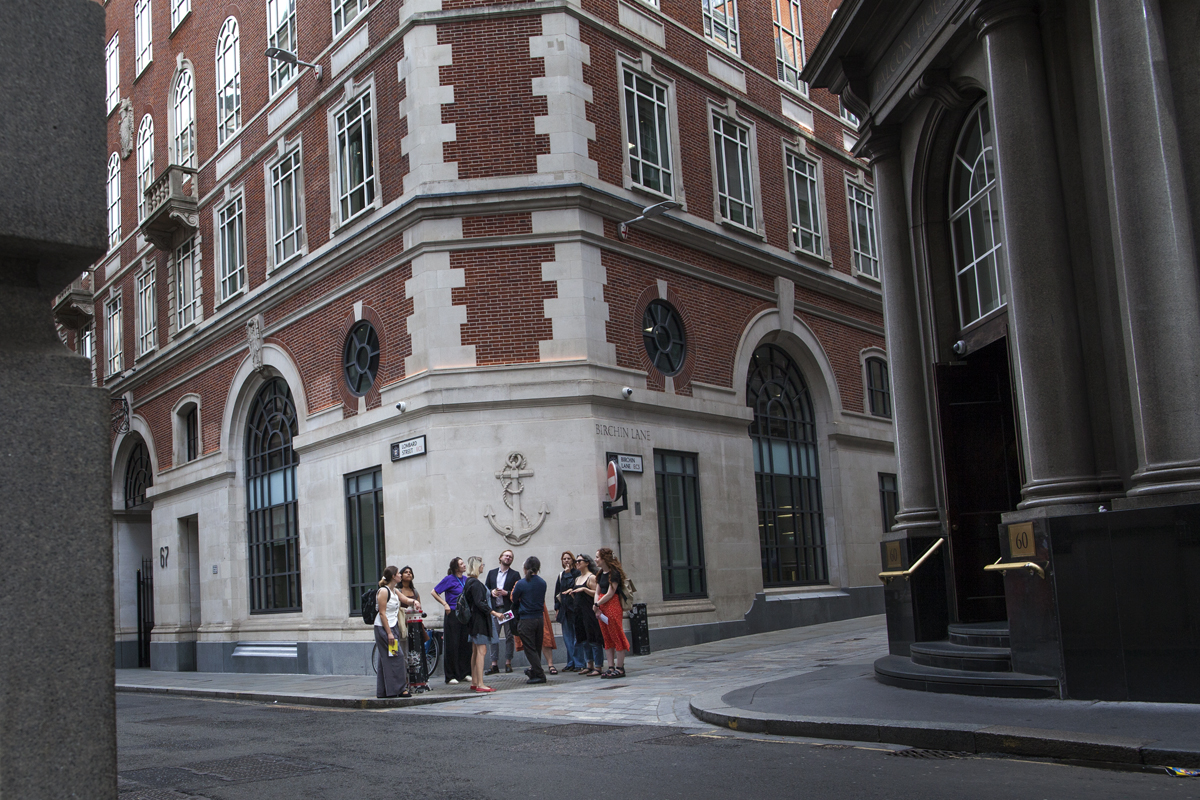
If you walk through the area of Spitalfields and Aldgate today, it’s not necessarily easy to get a sense of the history of this part of London, or how that history is linked to migration. Spital Yard is a narrow alleyway between office buildings, yet its past gives us great insight into the story and lives of migrant women, women who had a significant impact on the City and East End of London. Today 9 Aldgate is home to a branch of Nationwide bank; in the Georgian period, it was home to a bookshop that published the first book written by a Black woman in Britain. Much power can be held in ‘space’. How a ‘space’ is seen or how we view physical landscapes changes the way we interact with the world around us.
I had the pleasure of researching and putting together the Migration Museum’s Migrant Women from the City to the East End walking tour and truly saw the power of physical landscapes in understanding the history of migration in Britain. The main challenge when creating the tour was that many of the places discussed during it, such as 9 Aldgate, have been demolished or replaced. So, when creating the tour, it was important to ensure that those on the tour are able to leave with an understanding of how these specific stories have impacted the landscape we live in today.
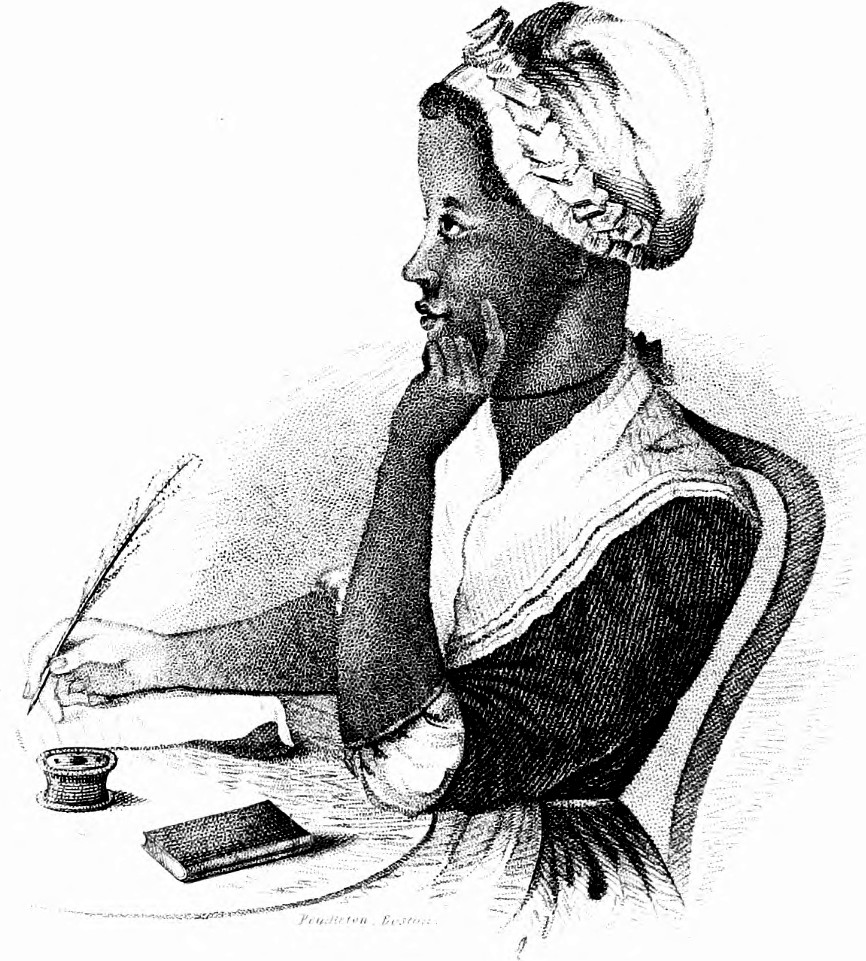
Phillis Wheatley: The Mother of Black Literature
Phillis Wheatley (known as the Mother of Black Literature) is a great example of how the streets and buildings of London can reveal to us the story of the British Empire and how it was something that wasn’t confined to the places colonised; but fundamentally shaped Britain itself too.
Wheatley was born in West Africa, most likely modern-day Gambia or Ghana. At the age of eight, she was enslaved, transported to America, and sold to Susanna and John Wheatley in Boston. Her name would be given to her while on the ship and she would take the last name of her enslavers. Unusually, Wheatley was taught alongside the Wheatley’s children. They recognised her talent and encouraged her to write, and by 14 she was already published.
It is important to remember that for much of Wheatley’s life America was still a British colony. This is most likely a big factor as to why she decided to travel to London and publish her book of poems at Bell’s Bookshop, 9 Aldgate, in 1773, three years before US independence. She became the first published Black woman in Britain. Wheatley did not stay in London for long. She travelled around the country and was recognised internationally for her works.
Understanding the significance of the East End in her story changes how we think of the London landscape. Not only does it show how connected its colonies were to Britain, it highlights how the Black migration story is not a post- World War Two phenomenon; but is something that begins well before. There were actually an estimated 10,000-20,000 Black people living in London during the Georgian period.
Mapping Black London, a digital project led by Northeastern University, has begun to unearth the significance of Black people in London’s long history. Through the piecing together of Parish records, court documents etc., the project has found evidence of Black people living in London since the Roman period. This kind of public-facing work challenges the perception of Britain being a mono-racial country until the 20th century.
Dona Luisa: Faith and Refuge in Spital Yard
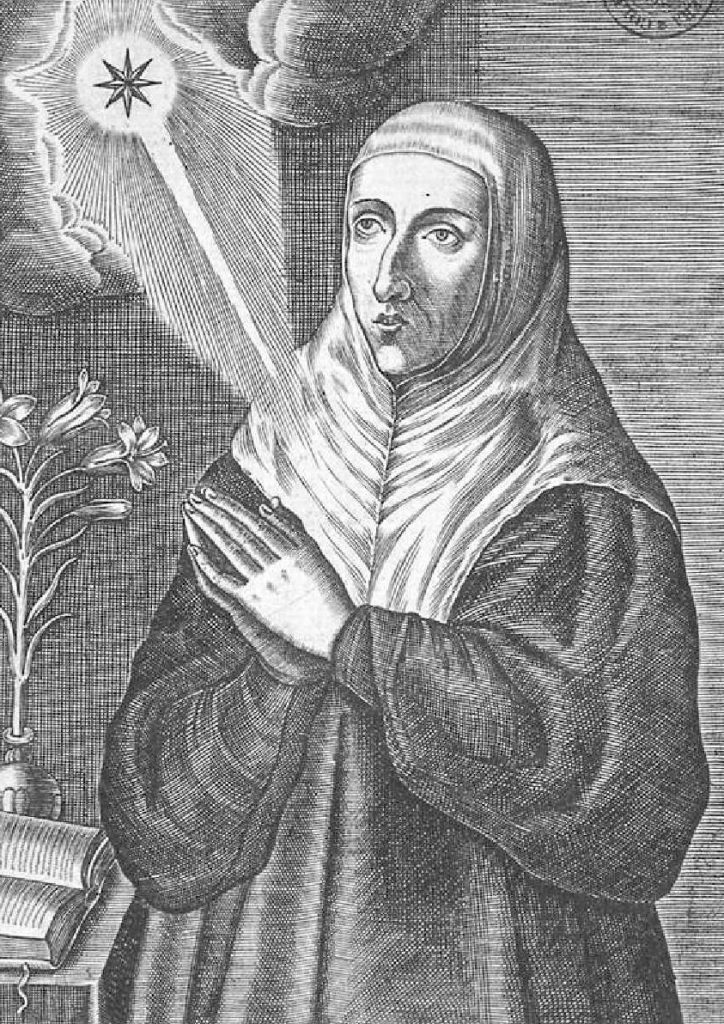
Dona Luisa de Caravajal Mendoza is another woman whose story reveals the complex history of migration in Britain . After the English Reformation in the 16th century, the Priory of St Mary Spital was destroyed and life for Catholics was not easy. Many chose to live outside the city walls in the houses and gardens among the remains of the old priory. This included Father Henry Garnet, a Jesuit priest who was eventually beheaded for possibly having prior knowledge of the 1605 Gunpowder Plot. He arranged for the arrival of Doña Luisa de Carvajal y Mendoza, a Spanish Catholic activist.
Dona Luisa was born into a rich family with royal connections. But Luisa rejected wealth and power. Instead, she dedicated herself to religion and the needs of women, especially in the poorest areas. She migrated to London from Spain in 1605, with a priest disguised as her servant, to support persecuted Catholics and convert people – especially women – to the religion.
In 1611, she rented a house on Spital Yard, where her next-door neighbour was the Venetian ambassador. She set up an illegal religious community of five women she called the ‘Society of the Sovereign Virgin’. They grew their own food and the house had tight security features, including double doors, grilles and a hidden chapel.
In 1613, her house was raided by over sixty soldiers on the orders of King James I and the Archbishop of Canterbury. They climbed the walls with ladders and broke down the doors. Two of her women died and Doña Luisa was arrested and imprisoned. Dona Luisa was released on the condition that she left England, but she refused and was imprisoned again.
Dona Luisa and her time in Spital Yard unveil an aspect of Britain’s turbulent religious history that tends to be forgotten. Not only did Dona Luisa, a Spanish migrant woman, live in East London, she collaborated with other Catholics, many of whom were also migrants, to keep her faith alive on the streets of London during a time when doing so was a matter of life and death.
Rethinking the Modern City
The brick house which Dona Luisa lived in is now swallowed up by the glass structures you see in the area today. But knowing her part in history invites us to rethink our perception of the City of London and the East End. Every stone, brick and building reveals aspects of the past; and more often than not, this past involves migrants – migrant women.
It is important that when exploring the physical landscape of the East End, we remember the importance of migrant women’s stories. These stories highlight the significance of migration in shaping British history – and the streets we walk today.
Hi, I’m Tawana. As a second-generation migrant myself, I have always been aware of how much Britain and its story is shaped by migration. My academic career goal is to assist in changing the notion of migration being something that needs to be stopped, and rather, having a more holistic understanding of migration as something that has always been a part of the British story.
Enjoyed this history? Keep exploring London’s streets
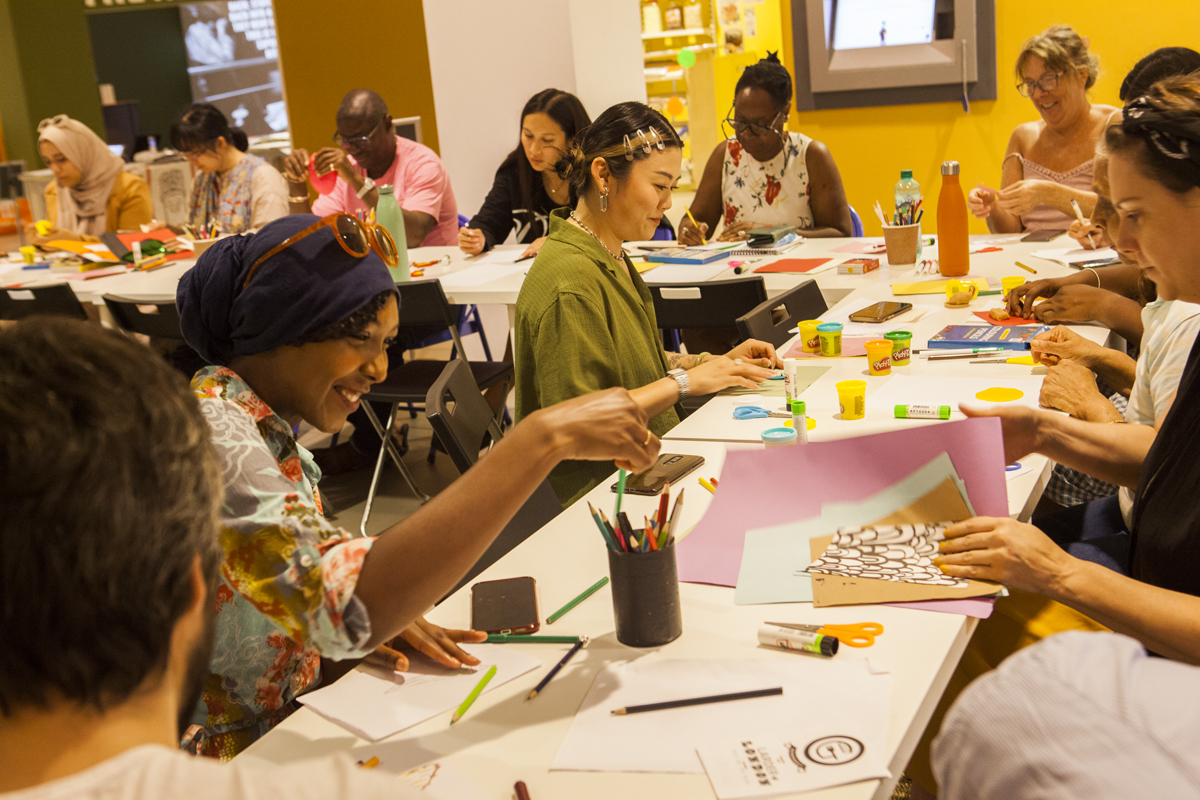
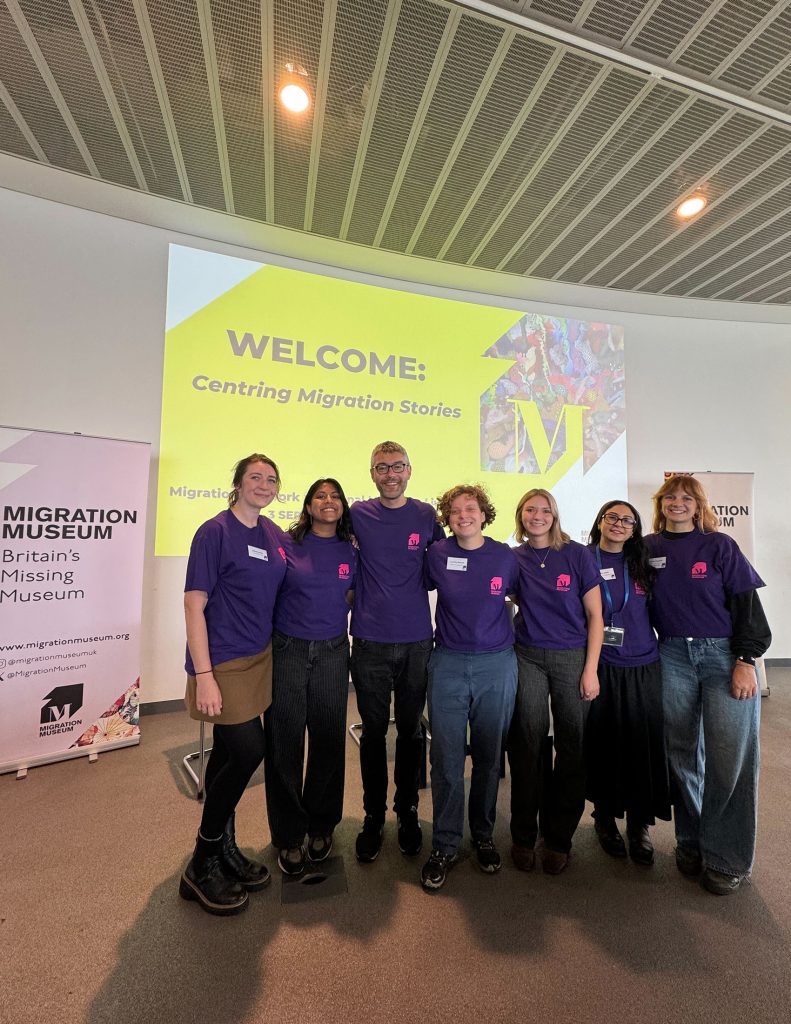
Image credits: A group in the City of London during a Migration Museum Walking Tour. Photography: Elzbieta Piekacz A portrait of Luisa Carvajal y Mendoza printed by Juan de Courbes. Portrait of Phillis Wheatley Frontpiece of Poems on Various Subjects, Religious and Moral License Public Domain.
A huge congratulations to our Front of House team for being shortlisted for the Best Visitor Experience at the Cultural Enterprises Awards.
This recognition celebrates the dedication and care of our staff and volunteers, whose warmth and expertise make every visitor experience special. From guiding visitors to meaningful exhibits that resonate with their personal stories and highlighting products from our Migrant Makers Market, to initiatives brought to life with local Community Curators, their work has created a space that is welcoming, inclusive, and guided by those it serves.
We’re grateful to everyone who has visited, shared their stories, and supported the museum — your curiosity and enthusiasm have always inspired us and made our work so rewarding. While we are currently not open to the public, we can’t wait to welcome you to our permanent home in the City of London in 2028. Get the latest updates on our journey by signing up for our newsletter here.
At the Migration Museum, personal storytelling is at the forefront of the work we do, including our learning programme. Oral history gives students a hands-on way to explore migration and local history. In this blog, James Lopez, a trainee teacher on a Teach First Summer Project, reflects on how these projects help students see how personal experiences shape broader histories.
The most rewarding experience from my years of teaching history was running an Oral History club with my students. Simply put, the club gave pupils a chance to learn about migration and local history, practice interview techniques and understand the ethics of interviewing. Each student then interviewed either a family member of someone in their community about either their experiences of migrating to Birmingham or living in the city.
Projects like this are becoming more common in schools across Britain. Teachers such as Dan Lyndon-Cohen, Eliza West and Emily Toettcher have published fantastic practical guides, and through my work with the Migration Museum I have created resources to support teachers running similar projects. The Migration Museum will shortly be running their own Oral History project with a local secondary school. In this post, I want to explain why Oral History matters, and what it brings to the classroom.
Understanding History in the Classroom
In 1991, the Prime Minister Margaret Thatcher, personally intervened to try and influence the development of the National History Curriculum. It is hard to imagine a sitting Prime Minister engaging in the detail of curriculum design for any other subject. But history has always been different. Debates over statues, museums, memorials and history classrooms are proxy for debates about culture, heritage and identity.
The ‘new history’ consensus since the 1970s has sought to treat classroom history as akin to disciplinary history – as a form of critically distant social inquiry into the past. But in reality, school history will always serve another purpose. History helps us make sense of who we are now, and where we might be going. To put it simply, “Who we were” shapes not only “who we are” but “who we ought to be” and as a result “what we ought to do”.
Teaching history is especially challenging in multicultural countries like Britain. If the national story exclusively represents the majority, minority groups risk being ignored or made to feel invisible. In that instance, ‘who we are’ becomes a projection that leaves minorities either not recognised or misrecognised.
Multicultural nations face great difficulties here. If our story about ‘who we were’ does not represent minorities, neither will our account of ‘who we are’. This not only denies some pupils an important sense of belonging, it also can leave them feeling disempowered, stereotyped and marginalised. This is why organisations like the Migration Museum and the movement to diversify the history curriculum matter: piece by piece, they help us build a national story that is more inclusive.
Learning Through Stories
Oral history should be an important part of this mission for two reasons. Firstly, it makes students active rather than passive learners. They can come to see themselves as having a role to play in constructing the past – there is a power to this. Secondly, it encourages pupils to see themselves and their families as active participants in bigger historical narratives. In the work I have done, this was about inclusion within local history, but there is no reason why Oral History projects cannot seek to include pupils within national history.
For example, one pupil interviewed his mother who had moved to Birmingham from Jamaica. Reflecting on his interview, he wrote, “Birmingham is a mix of various people from different places. So coming from Birmigham is a home away from home, because we mix with a lot of local communities.” Another pupil – whose entire family had recently migrated from Pakistan – wrote that he better understood his family’s story as a result. One simply wrote that “we are proud of our identity”.
Stories like these should remind us that oral history has powerful inclusive potential. By democratising the construction of historical narratives, and crucially giving voice to disempowered groups, oral history can be an important part of a wider movement to diversify British history.
About the author James Lopez is a Postgraduate Student at UCL interested in studying the intersections between political theory and social memory. He previously taught History at an Inner-city School in East Birmingham, and has spent time creating teaching resources for the Migration Museum.
This blog was written during James’s Teach First Summer Project with the Migration Museum.
The Migration Museum received funding from The National Lottery Heritage Fund to support the development of a dispersed Migration Collection, in advance of our move to our permanent home in the City of London in 2028. Our Collections Researcher, Lucy May Maxwell, explains more about the work we’ve been doing with partner organisations to uncover migration stories within existing collections and develop a prototype for people to discover and explore migration stories across the UK.
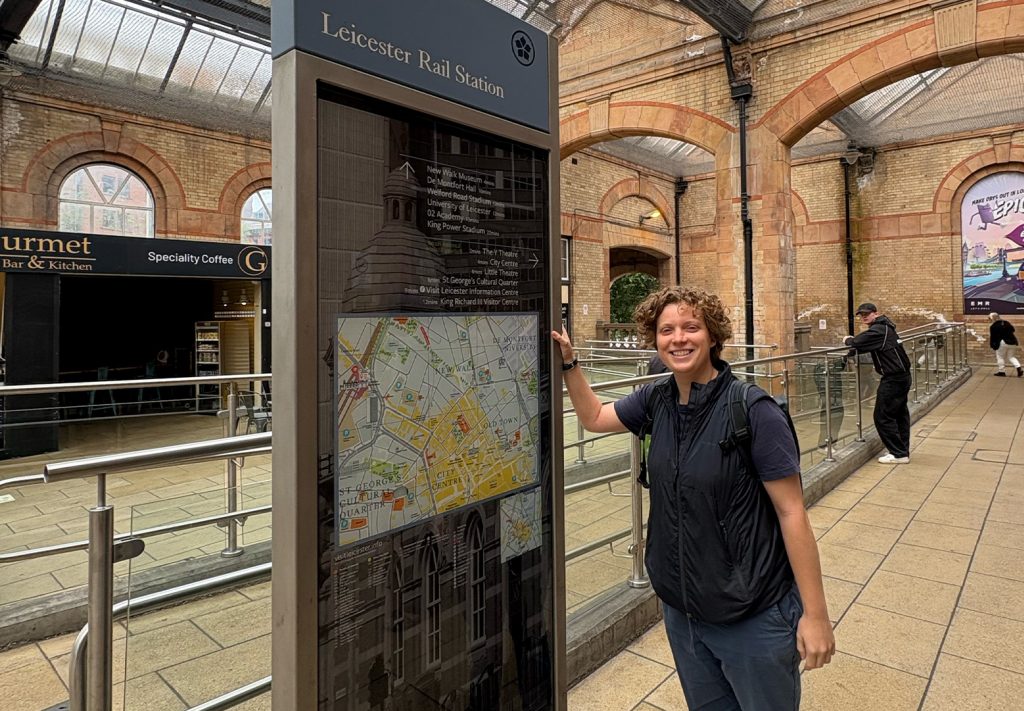
Lucy May Maxwell, Collections Researcher at the Migration Museum, on a research trip to Leicester Museums. Image: Migration Museum
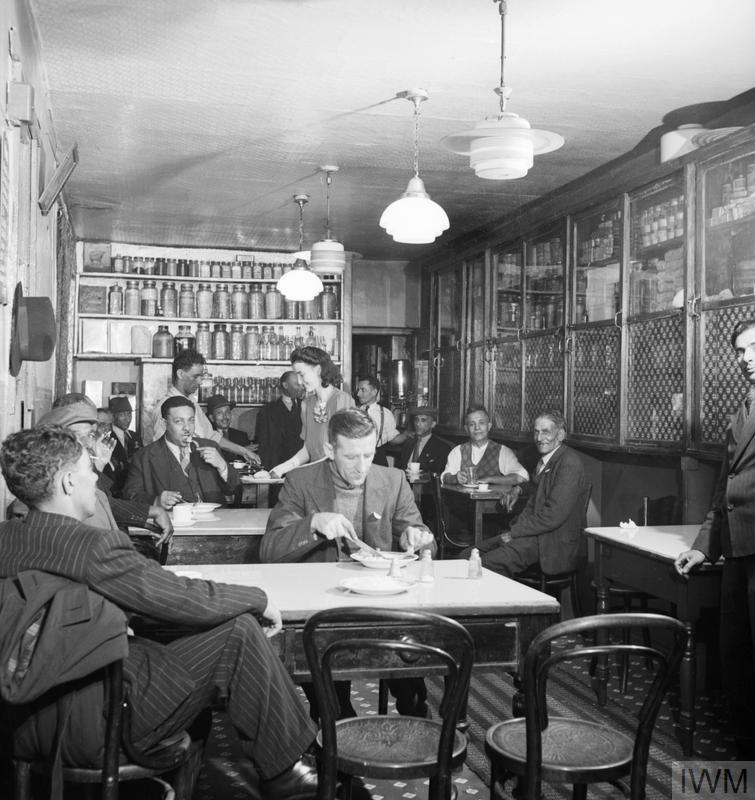
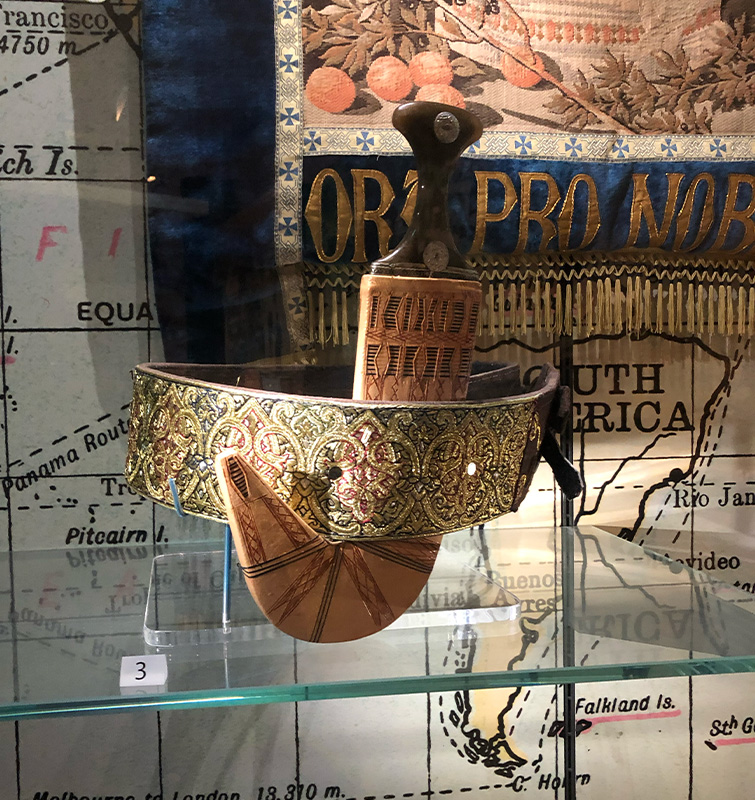
Earlier this year, as part of the collections research project, the Museum of Cardiff provided a list of migration-related objects that included a Jambiya, a Yemeni dagger, that they have on display. It was donated to the museum by Daoud Salaman. Reading the story of his parents running a cafe in Butetown around the Second World War, I remembered that the Imperial War Museum has a collection of photos of Butetown’s Muslim community at that time. I looked through the photos, and there were Ali and Olive Salaman in their cafe! It was the kind of moment we all get into museums for – the thrill of making connections and putting a face to the name.
This is one of many moments of connection that can leap out when looking at multiple museum collections through a thematic lens. Ali and Olive Salaman’s story would have fitted right into Migration Museum’s past exhibition Taking Care of Business: Migrant Entrepreneurs and the Making of Britain. While there are so many fantastic stories that the Museum has brought together in its previous themed exhibitions, this project gives us the chance to see how they connect to stories held by other museums and by bringing them together digitally, to show all of us a richer picture of UK’s migration history.
Researching Together
In order to make this project possible, I have been working with volunteers, students and fee-paid researchers to explore the collections of partner museums and archives, as well as to audit past migration-related community heritage projects funded by The National Lottery Heritage Fund. The aim is to uncover migration stories held by other museums, and in turn share them with a wider audience by featuring them in our digital Migration Collection.
In early 2025, students from Goldsmiths, UCL, SOAS, University of Westminster and University of Greenwich researched more than 200 previous NLHF projects and identified both strong community organisations for whom the heritage project is still at the heart of what they do, and other projects that have slipped out of sight due to website redesigns or charity closings. In those cases, we used the Internet Archive to look at snapshots of heritage assets such as oral history interviews.
We are building a digital Migration Collection platform that could safeguard these interviews for the longer term and share them with new audiences. We have started working with digital agency Torchbox to build a prototype platform that will test out how we can rescue heritage assets at risk of being lost and how we can shine a spotlight on others that are held in museum collections.
Staff at all of the partner museums have been very helpful in guiding us towards migration stories that are either on display or in store. Visits to each partner have shown the true scale of the collections that small teams are managing on a daily basis. These large collections show how much potential there is in existing museum collections, but they also highlight the challenges that come with many thousands of objects — attention cannot be given to all of them. We are here to give that attention to migration-related objects, and in doing so bring their valuable stories to a bigger national audience.
Migration Network Events
As well as looking at how to share stories and objects digitally, I have also been thinking through what the Migration Museum could physically collect in the next 3 to 5 years. The museum has always put its audiences first, creating exhibitions in collaboration with artists, story contributors, historians and local communities. How can we make the process of collecting objects as democratic as the guiding principles of the museum?
To help with this question, we have held two Migration Network events focused on museums and their collections. The first event in May was held online and 100 attendees heard presentations from North East Museums on their Multaka project, the Wiener Holocaust Library on their newly digitised collections, and Global Link on their Migration Stories North West project. The speakers gave brilliant insights into how the best digital engagement products and co-produced digital exhibitions out there today centre people’s interests in collections work.
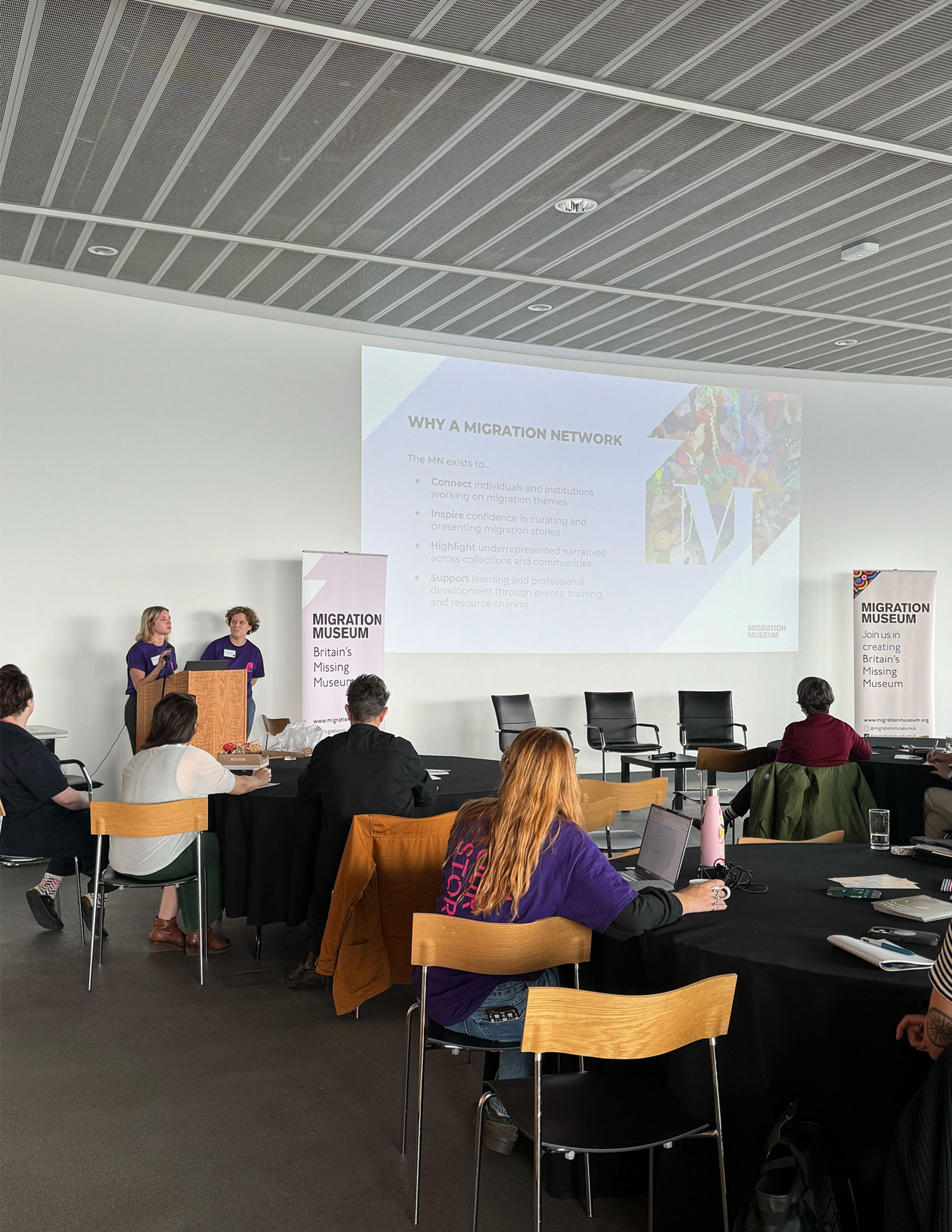
Lucy and Daria introducing the Migration Museum at a Migration Network Event co-hosted with National Museums Liverpool. Image: Migration MuseumThe Migration Museum team at a Migration Network Event, co-hosted with National Museums Liverpool. Image: Migration Museum
At the beginning of September, we co-hosted an in-person Migration Network event with National Museums Liverpool (NML). Thanks to the generosity of NML staff, everyone was given insights into the latest plans for the Waterfront Transformation, and partnership work at the Maritime Museum, International Slavery Museum, World Museum and Museum of Liverpool. As well as discussing the role of objects, there was also an emphasis on the need to create spaces where people feel welcome, and how the co-design of spaces can link historic stories to contemporary cultures. So far it has been a year of many rich conversations and discoveries. We’ll be sharing the results of all of this project work early in 2026. In the meantime, we’d love to hear from you — what would you like to see at the Migration Museum?
Thanks to The National Lottery Heritage Fund and National Lottery players for supporting this project.